Council of Ministers Approves Executive Measures to Translate General Mobilization into Institutional Action
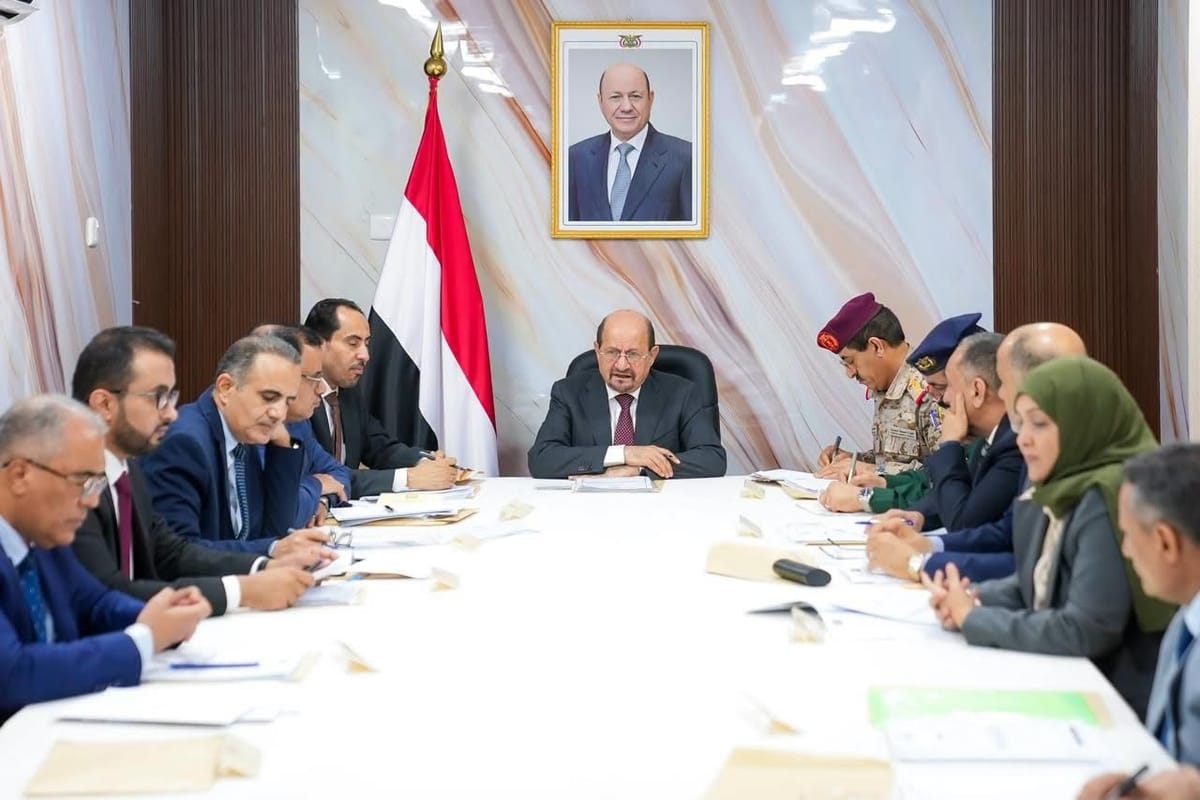
The Council of Ministers held a meeting on Thursday in the temporary capital, Aden, chaired by Prime Minister Shaye Mohsen Al-Zindani. It approved a package of executive measures to enhance the readiness of state institutions and translate the requirements of the general mobilization into practical action plans, with direct and continuous follow-up on their implementation.
The Council affirmed that the general mobilization represents a new phase requiring the redoubling of efforts by state institutions, the mobilization of national resources, and raising the level of institutional, military, security, economic, and humanitarian readiness. This will contribute to protecting citizens, preserving resources, restoring state institutions, and expanding their authority over all Yemeni territory.
The Council directed the integration of efforts from ministries, institutions, and local authorities, the mobilization of human and material resources, the enhancement of coordination between governmental, military, and security agencies, and the transformation of the general mobilization into organized institutional action.
The Prime Minister stated that this phase requires stronger and more capable state institutions, coinciding with the confrontation by the armed forces, resistance, and tribes against the Houthis and the Iran-backed project. He emphasized that the government is also engaged in the battle to stabilize state institutions, protect the economy, and secure services and citizens' lives.
The Council discussed economic, financial, and service measures aimed at stabilizing markets, securing essential goods, ensuring regular salary payments, and meeting state obligations, in addition to strengthening health services and taking urgent measures in the electricity sector.
It also directed raising readiness to face any humanitarian repercussions resulting from Houthi escalation, and strengthening the state's capacity to receive and shelter displaced persons and provide them with healthcare and food in coordination with international organizations and partners.
The Council praised the popular and official response to the general mobilization, community initiatives, and support convoys for the armed forces, resistance, and displaced persons. It affirmed that the door remains open for those who return to the side of the Republic and constitutional legitimacy, in accordance with legal procedures, within the framework of the general amnesty announced by the Chairman of the Presidential Leadership Council, Rashad Al-Alimi.
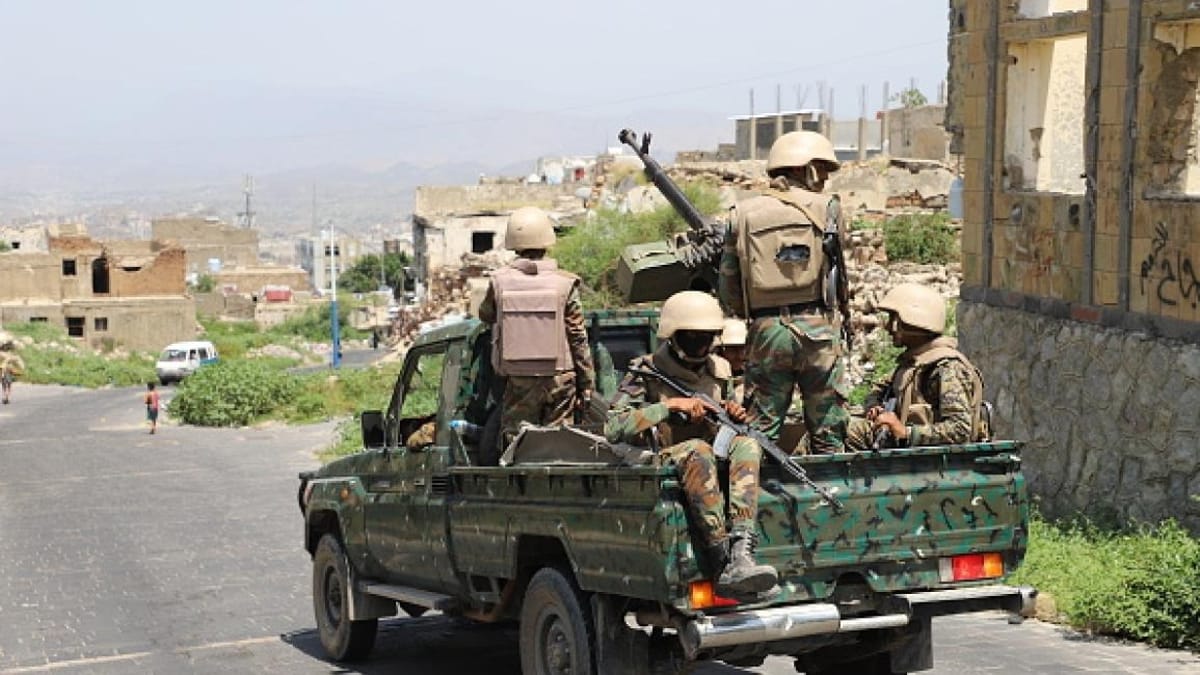
On the ground, the Council discussed the escalating developments in Taiz and attempts to advance towards areas in Lahj, along with the accompanying targeting of civilians and displaced persons. It praised the forces stationed in Taiz, Lahj, and various fronts, stressing that the protection of civilians and the displaced is the state's responsibility.
The Prime Minister warned against viewing the Houthi threat from a narrow geographical or political perspective, pointing out that developments on the West Coast and Bab al-Mandab have impacts that extend beyond Yemen's geography, affecting freedom of navigation, international trade, and supply lines.
The Council praised Saudi Arabia's continuous support for the Yemeni government, the latest being the deposit of the third installment of budget support, valued at $60 million, with the Central Bank of Yemen. It stressed the importance of this support in meeting obligations and strengthening the work of state institutions and services.
The Council reviewed reports on the health, food, service, and humanitarian situations, as well as military and security developments. It directed to raise the level of response, secure food and medical stocks, ensure the continuity of services, enhance coordination, and support the fronts.
Al-Zindani stressed the need to develop clear plans, make swift decisions, and conduct daily follow-up to implement the requirements of the general mobilization, translating them into comprehensive institutional action.
المصدر: Saba Net