Yemeni and Regional Escalation: Internal Battles and Houthi Attacks on Saudi Arabia
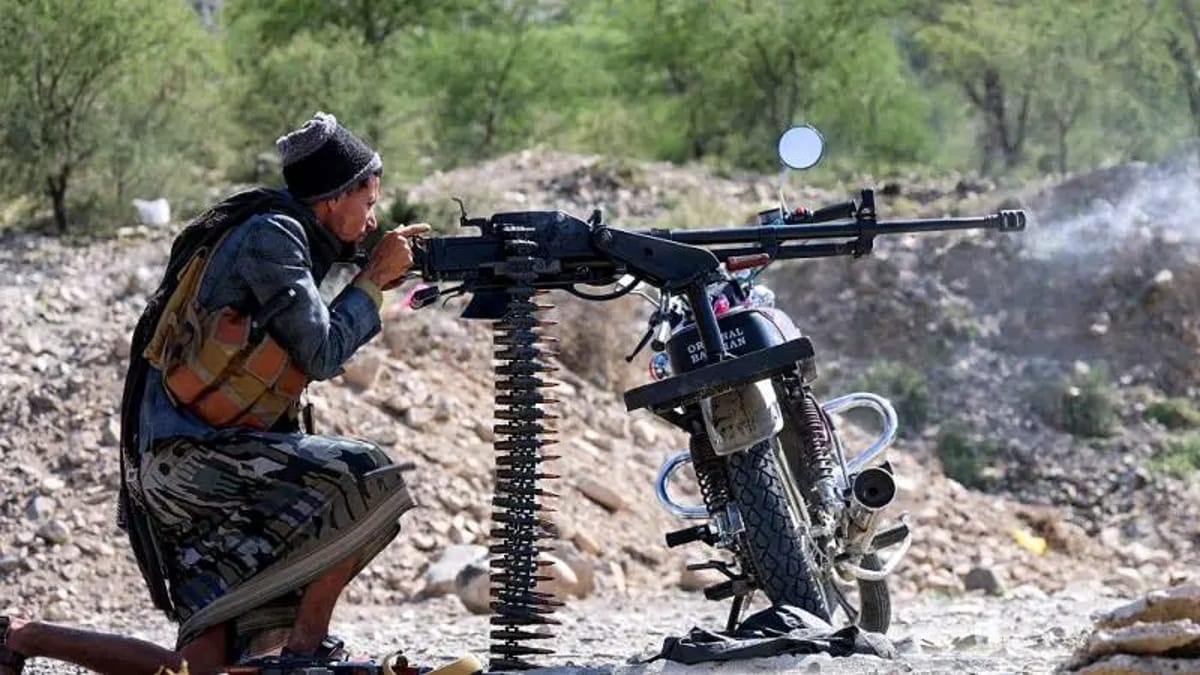
Military confrontations in Yemen are entering a new phase of escalation, with the scope of battles expanding between government forces and the Houthi group in four governorates: Taiz, Lahij, Marib, and Al-Jawf. This coincides with continued Houthi attacks deep within Saudi Arabia and rising regional tensions in the Strait of Hormuz, in a scene where Yemeni fronts intertwine with the calculations of regional conflict and the security of strategic corridors.
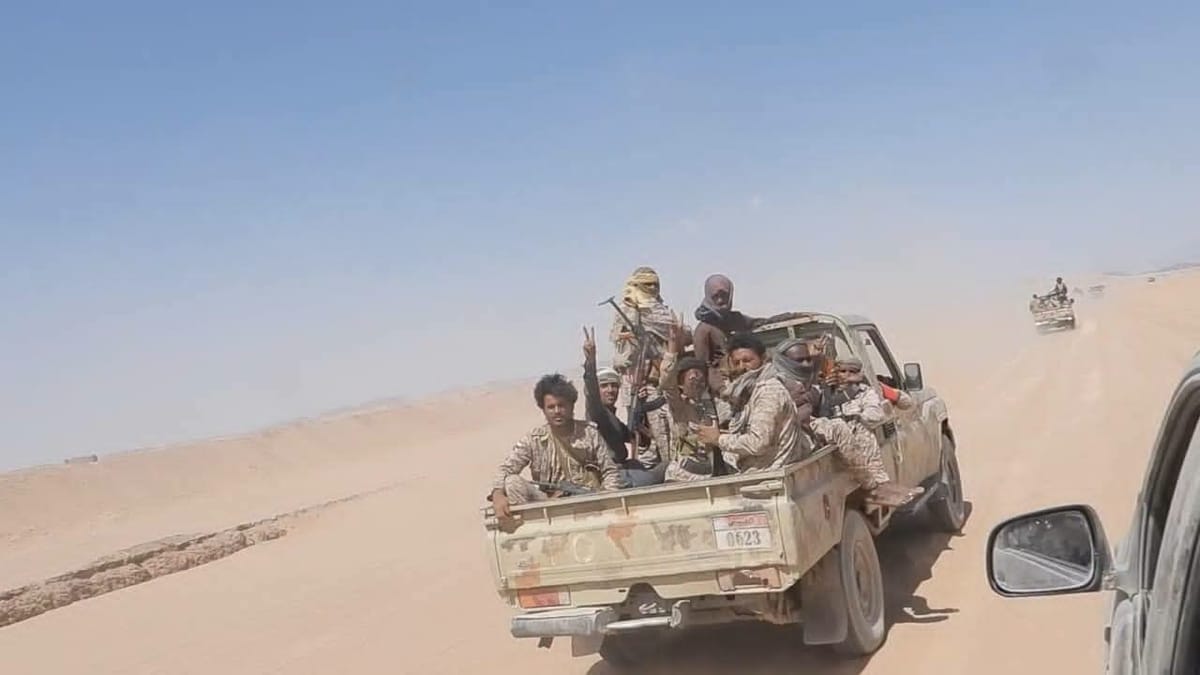
Along the front lines, military operations continue amidst mutual attempts to achieve battlefield breakthroughs. In Lahij governorate, field sources reported that government forces managed to recapture positions on the Al-Mudaraba front, while an airstrike targeted Houthi military reinforcements in the Al-Maqatirah district.
In Al-Jawf governorate, the movements of government forces have emerged as the most significant military development in recent days, coinciding with ongoing confrontations in Marib, where forces managed to repel Houthi attacks on the Raghwan front. In Taiz, battles continue on several front lines amidst Houthi attempts to pressure government force positions.
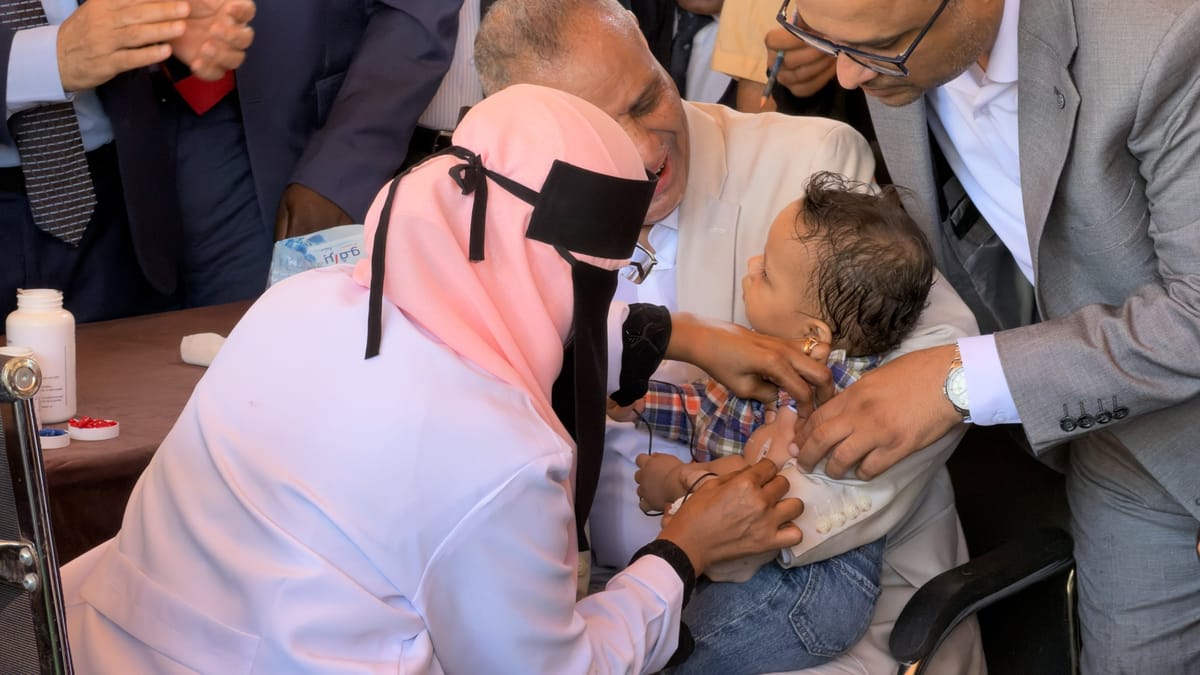
The repercussions of the confrontations are not limited to the military aspect, as the humanitarian situation in the besieged city of Taiz worsens, with the continued suffering of residents and a shortage of basic necessities, including medicines and medical supplies, amid the failure of international efforts to achieve a tangible breakthrough to end civilian suffering.
Houthi Attacks Reach Deep Inside Saudi Arabia
Parallel to the internal battles, the Houthi group expanded the scope of its attacks towards Saudi territory, an escalation that moved the confrontation to a more sensitive level, targeting vital installations and strategic sites within the Kingdom.
The coalition announced the interception and destruction of several ballistic missiles and drones launched towards the capital, Riyadh, and the Eastern and Southern regions.
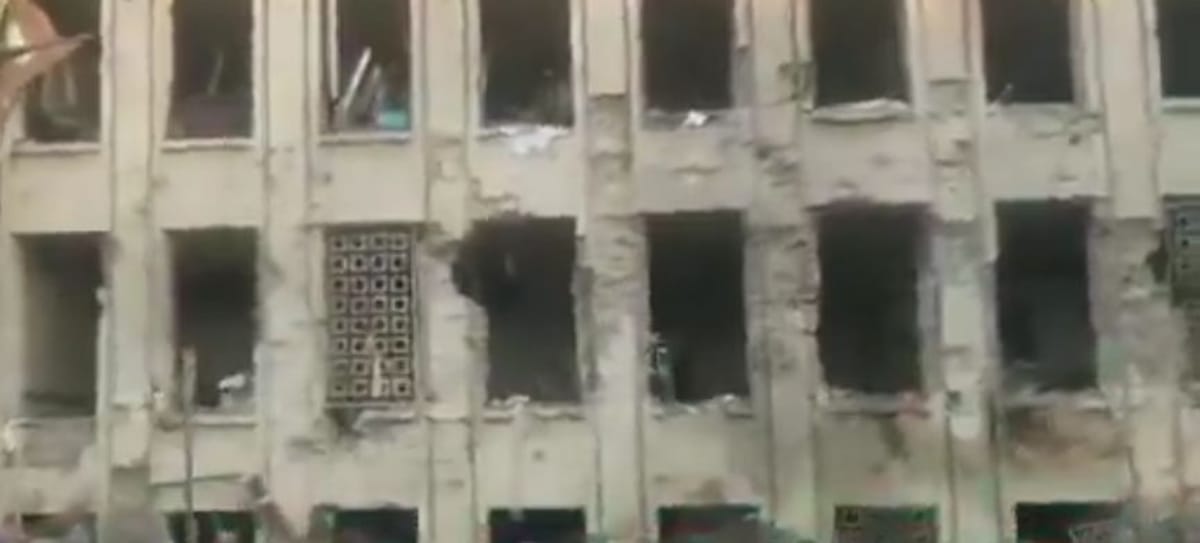
In a notable development, the Saudi Ministry of Energy confirmed that a building belonging to Aramco in Riyadh sustained limited material damage from falling shrapnel, with no human casualties reported.
For his part, the Houthi military spokesman announced the targeting of King Khalid International Airport, Aramco facilities, and the Saudi Financial Center in Riyadh, a move reflecting the expanding range of targets the group includes in its military operations.
These attacks raise questions about the political and military objectives the group seeks to achieve by moving the confrontation deep into Saudi Arabia, especially given the escalation's connection to the path of previous understandings between Riyadh and the Houthis and the future of a political settlement in Yemen.
Houthis May Focus on the Saudi Front
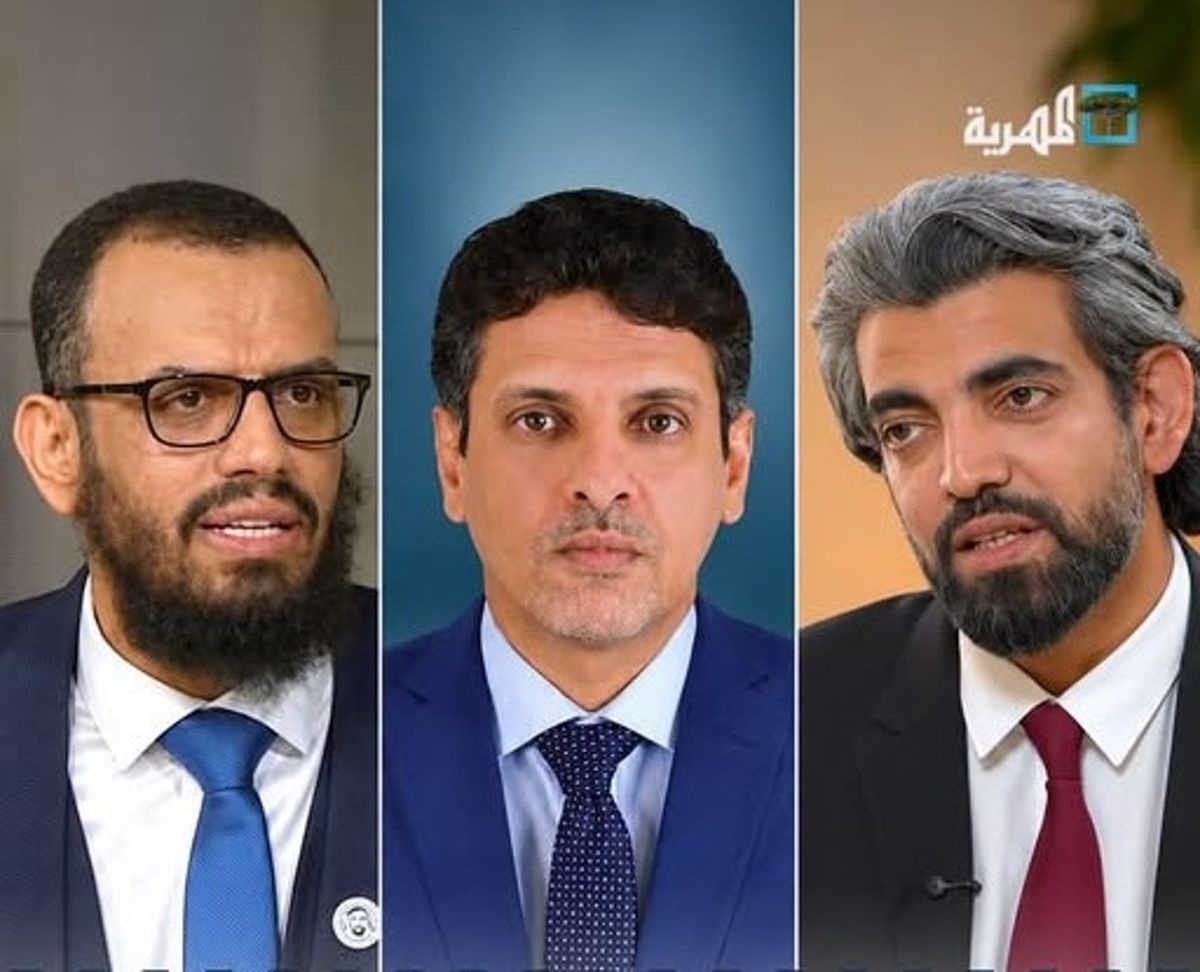
In a reading of the escalation trends, political analyst Abdulghani Al-Iryani suggested in a statement to Al-Mahriah TV that the Houthi group might intensify its operations on the Saudi front in the coming weeks, rather than focusing on the Taiz front, given the failure to achieve internal military breakthroughs as quickly as it had sought.
Al-Iryani said that the Houthis have not been able to make rapid progress in recent weeks, although the possibility of breakthroughs still exists, pointing to a significant difference in military efficiency between government forces and Houthi forces.
He explained that the group, in his estimation, seeks to use military escalation against Saudi Arabia as a means to pressure it to return to the initial understandings reached in 2023, which he said granted the Houthis significant political privileges, effectively handing them power in Yemen.
He added that the resilience of citizens in Taiz has made the southern front less attractive for the Houthis, suggesting that the Najran and Al-Rabu'ah fronts are among the prominent military options the group might resort to in order to embarrass Riyadh and increase pressure on it.
For his part, Dr. Ali Al-Hail, a Saudi professor of politics and media and a researcher on Houthi affairs, criticized the escalation of military operations in Yemen and the Houthi attacks on Saudi Arabia, warning of the consequences of continued confrontation for civilians and regional security.
Al-Hail said, in statements to Al-Mahriah TV's program 'Al-Tasi'a' (The Ninth), that what caught his attention recently was the intensification and expansion of battles in Taiz, Marib, Al-Jawf, Mocha, and Dhubab, which overlooks Bab el-Mandeb, coinciding with the worsening humanitarian situation in the besieged city of Taiz.
He pointed out that civilians, especially children, women, and the sick, are paying the highest price for the continuation of the war, criticizing the lack of sufficient attention to their suffering from the conflict parties, and stressing that the humanitarian situation has reached difficult levels with medicines running out in the city.
He added that Yemenis' appeals to the international community have not resulted in effective action, considering that international positions on the Yemeni crisis do not differ much from their handling of other humanitarian crises in the region.
Regarding the Houthi attacks on Saudi Arabia, Al-Hail described those attacks as unjustified, pointing to a unified Gulf position supporting the measures the Kingdom might take to repel the attacks.
He said that targeting vital Saudi facilities, including King Khalid International Airport, Aramco facilities, and the financial center, does not serve the interests of Yemenis or the Houthis, stressing that draining Saudi Arabia negatively affects the entire region and that oil facilities represent economic interests that extend beyond the Kingdom's borders.
He added that the Houthis must stop attacks on Saudi territory, warning that the continued targeting of vital facilities exacerbates the confrontation and further complicates the chances of reaching a political settlement.
In his assessment of international mediation efforts, Al-Hail expressed skepticism about the United Nations' ability to achieve a real breakthrough in the Yemeni crisis, considering that repeated calls for de-escalation and restraint have not translated into practical measures that end the war or alleviate the population's suffering.
He questioned the outcome of the UN envoys' movements over the past years, noting that Yemenis have not seen tangible results commensurate with the volume of visits, meetings, and international promises.
He also criticized what he described as the lack of European and American effectiveness in dealing with the Yemeni war, despite the ongoing battles and some attacks crossing the country's borders, pointing out that more than 23 million Yemenis suffer from difficult humanitarian and living conditions.
In the same context, Al-Hail raised questions about the inability of the internationally recognized Yemeni government to resolve the confrontation with the Houthis, despite repeated talk of large-scale military operations and targeting of the group's sites, pointing to the Houthis' continued possession of missile and drone capabilities that enable them to target airports and facilities inside Yemen and Saudi Arabia.
He stressed that the continuation of Houthi attacks and the corresponding military responses place the region in a continuous cycle of escalation, calling on the group to stop targeting the Kingdom, considering that the Saudi response comes in the context of countering the attacks it faces.
Washington-Tehran Understandings.. Potential Repercussions for Yemen
On the regional level, political analyst Abdulghani Al-Iryani linked the future of escalation in Yemen to the outcomes of the US-Iranian confrontation, considering that the chances of continued US military operations against Iran have decreased in light of internal political developments in the United States.
He pointed to positions within the US administration opposing the continuation of the war, including statements by Vice President JD Vance regarding the stance of American voters on the confrontation, suggesting that a shift towards an understanding between Washington and Tehran could lead to a relative calm in the region.
Al-Iryani believed that any potential US-Iranian understanding could reflect on the Yemeni arena, pushing towards de-escalation on the battlefronts, and possibly creating the conditions for resuming the political process, if there is a regional and international will to contain the conflict.
Muscat Moves to Contain the Escalation
Amidst the military developments, the Sultanate of Oman continues its diplomatic efforts to contain tensions and prevent the confrontation from widening.
Omani Foreign Minister Badr Albusaidi met on Sunday with the UN Special Envoy for Yemen, Hans Grundberg, in Muscat, where the two sides discussed the latest developments in the Yemeni crisis, the repercussions of the escalation on regional security, as well as efforts to de-escalate confrontations and create conditions for resuming the political track.
These moves come at a time when UN efforts face increasing challenges due to the continuation of military operations and the intertwining of the Yemeni file with regional tensions, especially the confrontation related to Iran and the Strait of Hormuz.
Al-Jawf and Marib: A Prelude to Greater Military Developments
On the other hand, the internationally recognized Yemeni government adheres to the military option, stressing that recent field movements are part of the battle to restore state institutions and end Houthi control.
A government official, who preferred to remain anonymous, said in a statement to 'Al-Mahriah Net' that the Yemeni Armed Forces are determined to liberate the country from the Houthi group, considering that talk of mediation and de-escalation represents, as he described it, repeated attempts to save the group and give it a new opportunity to reorganize its ranks.
He added that what the Al-Jawf and Marib fronts are witnessing are merely preludes to major military developments in the coming days, confirming the government's continued push to retake areas under Houthi control.
These statements reflect the government's adherence to the military resolution option, versus regional and international efforts to revive the political track, amid a lack of clear indicators of the possibility of reaching a settlement soon.
Strait of Hormuz.. Another Front in the Conflict's Calculations
Away from the Yemeni fronts, the escalation in the Strait of Hormuz adds a new dimension to the regional confrontation, with the Iranian Revolutionary Guard announcing fires on three tankers, amidst mutual accusations regarding the targeting of maritime traffic.
These developments coincided with limited US strikes targeting an air defense system on Qeshm Island, while Washington announced that blockade measures and the pursuit of land supplies had prevented Iranian oil exports worth over $25 billion.
This escalation places the security of navigation and energy supplies before additional challenges, and also complicates the political and military calculations of the powers involved in the region, especially with the intertwining of American, Iranian, and Gulf interests.
The simultaneous developments in Yemen, Saudi Arabia, and the Strait of Hormuz reveal the widening scope of the confrontation and its overlapping paths, as the Yemeni battles are no longer confined to internal front lines but have become directly linked to regional security calculations and the balance of pressure between international powers.
المصدر: Al-Mahriah Net