Al-Alimi Rejects New Truce: Is the Government Shifting from Managing War to Imposing Peace Terms?
Amid escalating confrontations on several Yemeni fronts and diminishing chances of returning to the truce path brokered by UN and international talks in 2022, the Yemeni government is adopting a tougher stance on any new ceasefire arrangements, especially after a series of escalations carried out by the Houthi group in the recent period.
The UN-sponsored truce in April 2022 had contributed to reducing the intensity of military operations before it officially ended in October of the same year. The level of military escalation remained significantly low in the subsequent period, despite the failure to reach a comprehensive peace agreement.
Recently, the scene has taken a different turn with the return of escalation, culminating in the latest developments in late June, when the Houthi group announced what it described as a "siege for a siege" equation against Saudi Arabia, accompanied by military movements on several internal fronts.
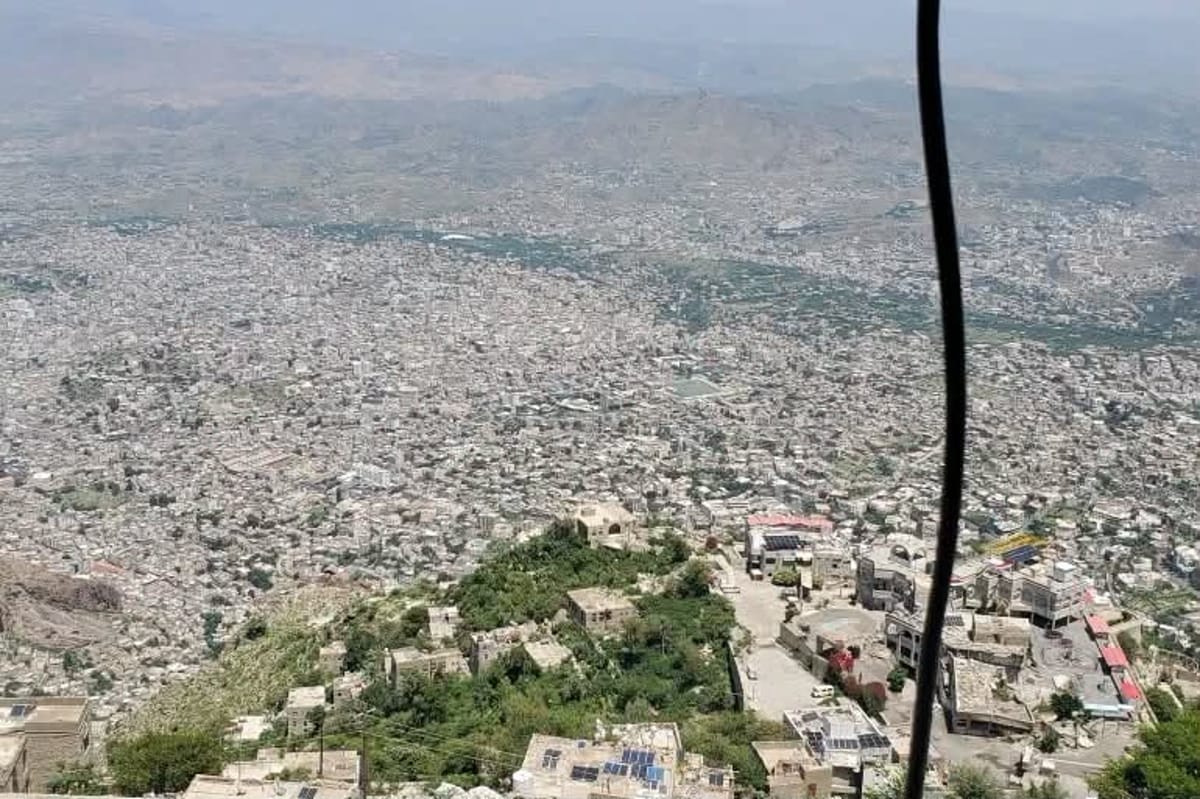
As tensions spread to five fronts—Saada, Marib, Hodeidah, Taiz, and Al-Dhale—the Yemeni government revealed developments in its military capabilities, including the acquisition and use of drones. This coincided with official assurances of cohesive political and military decision-making, which appears to be prompting a reconsideration of its previous approach to truces and the settlement process.
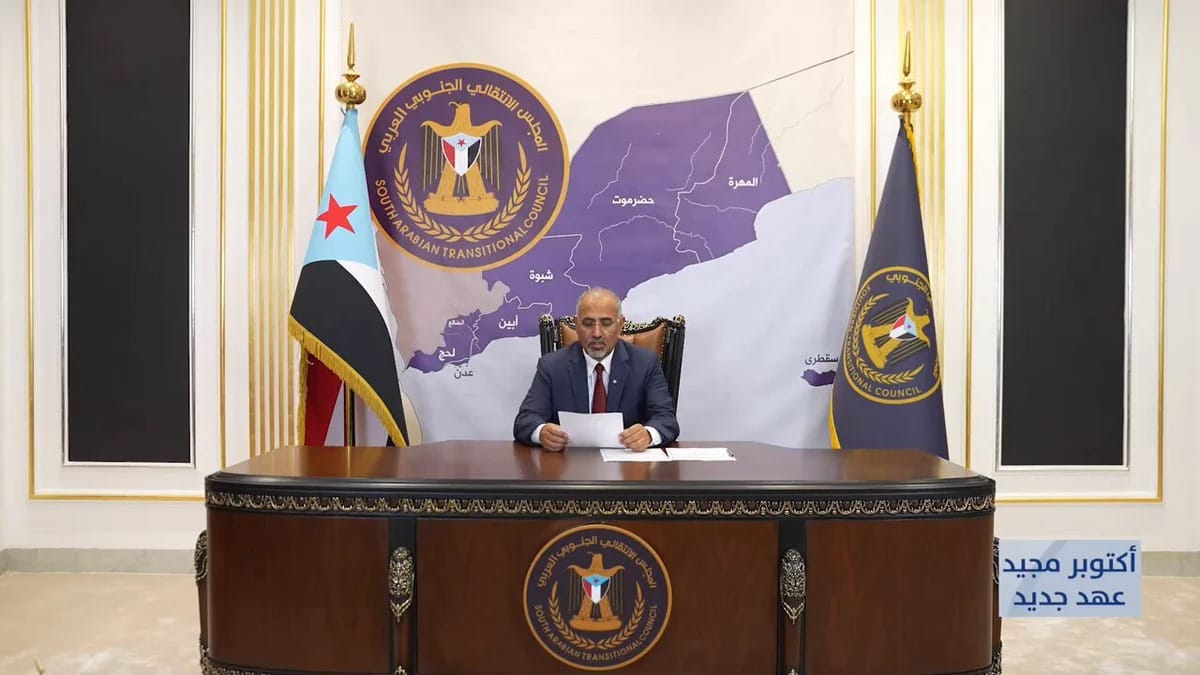
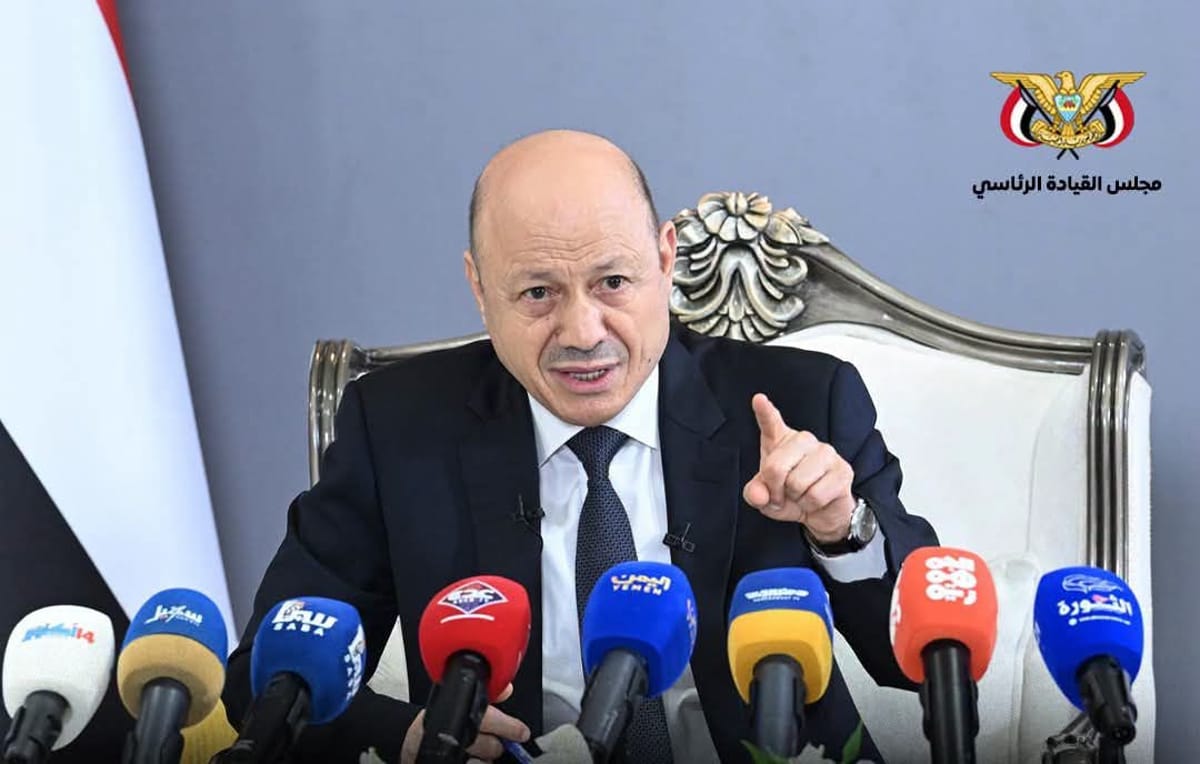
In this context, the Chairman of the Presidential Leadership Council, Dr. Rashad Al-Alimi, announced last Wednesday that "the Yemeni government does not support entering a new truce." This stance reflects a notable shift in official rhetoric from managing a temporary calm to demanding a settlement that leads to lasting peace under clear conditions.
During a lengthy speech to representatives of official and local Yemeni media institutions, Al-Alimi stated that the government does not support a new truce or a ceasefire agreement, but rather seeks a "permanent and sustainable peace" based on a state with a monopoly on weapons and sovereignty, and where no militias exist outside its institutions.
Al-Alimi considered the position of the Yemeni state today to be "completely different" from previous stages, in light of what he described as "internal unity, a cohesive political and military front, growing popular support, and a fundamental regional and international shift in understanding the nature of the threat posed by the Houthi group."
Al-Alimi explained that "the armed forces are now under a single operations room and the command of the Supreme Commander of the Armed Forces and the Supreme Military Committee," stressing that the government will not accept the continuation of any Houthi action without a comprehensive response or deterrence.
In what he described as a "final" message to the Houthi group, Al-Alimi said the opportunity is still available for them to lay down their arms, transform into a political party, and compete at the ballot box on an equal footing with other Yemenis, affirming that "Yemen has room for everyone under the roof of the state and the law."
This position opens the door to broader questions about the nature of the next phase: Does the Yemeni government now believe that political and military conditions allow it to move from managing the war and accepting truces to attempting to impose its conditions at the peace table? And does Al-Alimi's stance represent a real shift in the government's strategy?
Zero-Sum Options Produced by Escalation
Commenting on this, political analyst Yassin Al-Tamimi believes that "the hardline stance of President Rashad Al-Alimi cannot be separated from the new Saudi orientations, which stem from the need to end the Houthi threat, its regional extensions, and its chaotic potential."
He added to "Al-Mahriah Net": "The legitimate authority used to yield to settlements and truces imposed by sponsors and mediators, which often resulted from the military behavior of the Houthis and their backers, Iran and its militias, and the complicity of influential international powers."
He continued: "Saudi Arabia could then reposition itself, either as a mediator or a negotiating partner."
Al-Tamimi considered that the situation today is completely different. The legitimate authority is under attack, Saudi Arabia is facing a naval blockade, and thinking about settlements, truces, and rewards is no longer an option due to the zero-sum choices produced by the military adventures of the Houthis and Iran in the Yemeni and regional arenas.
War and Peace in Saudi Arabia's Hands
For his part, Adel Al-Hasani, head of the Peace Forum, says, "The decision to declare war or peace is in Riyadh's hands; if Saudi Arabia wants war, it will break out, and if it wants peace, it will declare peace. Al-Alimi's statements mean little if Saudi Arabia does not approve them."
He added to "Al-Mahriah Net" that "the situation is currently going through a phase of escalation, and Riyadh wants to use the card of the legitimate authority on the internal fronts to relieve pressure on itself, especially since the Houthi group has targeted its facilities, airport, and ships."
Al-Hasani explained that "Saudi Arabia wants to suggest to the world that the conflict is confined to Yemen's interior and that it has no problem in Yemen, although the real problem today lies in the targeting of its facilities, oil, and interests."
Houthi Rhetoric Softens
In contrast, the Houthi group's rhetoric in recent days has seen a notable de-escalation towards Saudi Arabia, with new signs of openness to dialogue and negotiation emerging.
The group's spokesman and head of its negotiating delegation, Mohammed Abdul-Salam, announced last Tuesday that the group is continuing its contacts and meetings with regional and international parties, stressing that it "has not closed the door to dialogue and negotiation."
The following day, the group's Ministry of Foreign Affairs called on Saudi Arabia to make a "courageous and wise decision" to stop what it describes as aggression and lift the blockade, considering that the path to peace is still possible, in a clear shift from the harsh language and threats that characterized the group's rhetoric in recent weeks.
Observers believe that the softening of the Houthis' rhetoric may be linked to the government's more resolute stance, the support it enjoys from the coalition, and military developments that enhance its ability to reshape the equation amid the land and sea pressures on the Houthi group.
The latest escalation places both parties before a new equation: the government appears more insistent on conditions that go beyond temporary truces toward a peace based on state institutions, while the Houthis' recent positions indicate a desire to keep the window for negotiation open.
Between the hardening of positions and the softening of rhetoric, the chances for a settlement will remain linked to the ability of the parties to translate their stances into practical understandings that end the war and lay the foundation for a sustainable peace that preserves Yemen's unity and sovereignty.
المصدر: Al-Mahriah Net