UN Report: Road Closures Worsen Humanitarian Crisis in Taiz
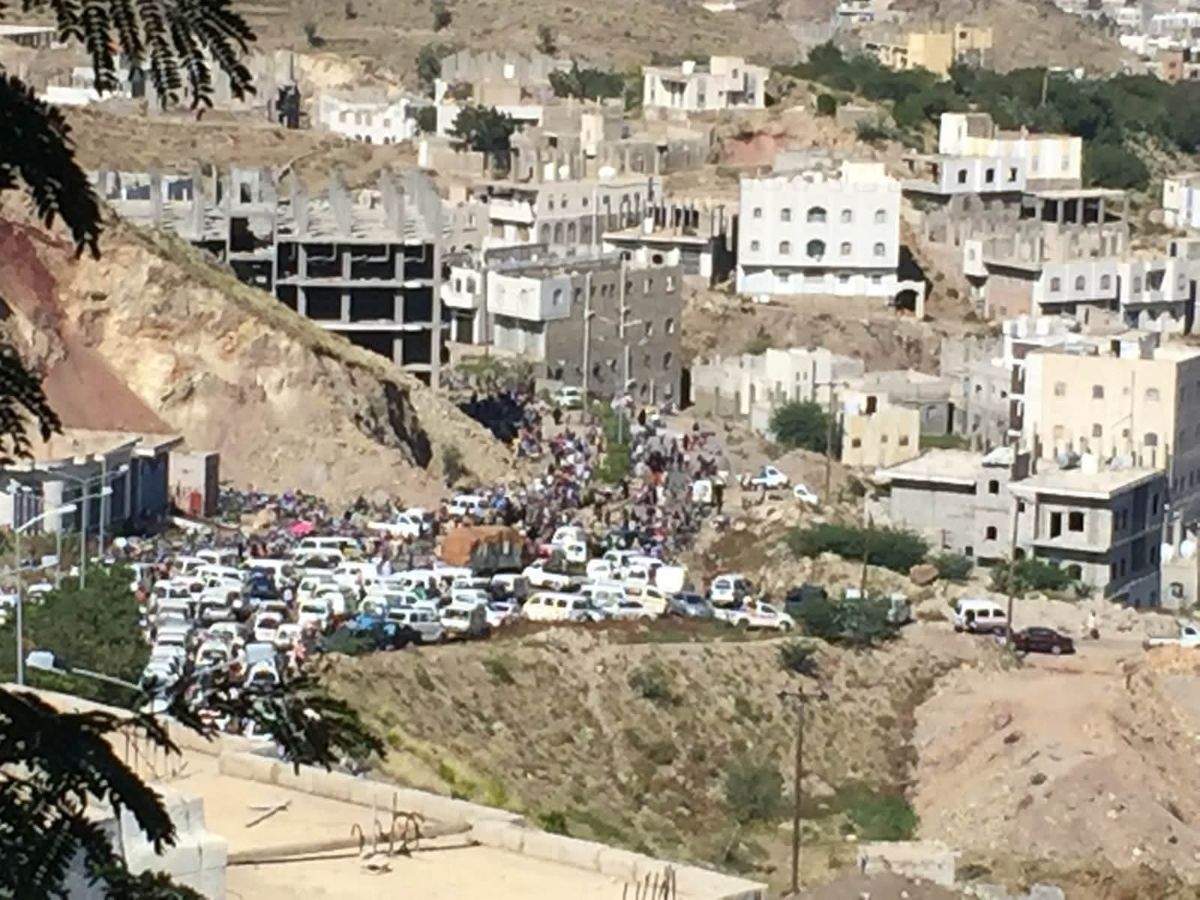
The United Nations Office for the Coordination of Humanitarian Affairs (OCHA) said that more than 231,000 people have been displaced in Yemen due to escalating hostilities between August 1 and October 14, 2026, warning of a worsening humanitarian crisis, especially in Taiz Governorate.
In a humanitarian situation report published Sunday, the office stated that the total number of displaced persons reached 231,991, from 38,664 families, noting that 99 percent of displacement cases were recorded since August 31, following the escalation of fighting.
It added that Taiz Governorate received 52 percent of the displaced, followed by Lahj with 23 percent, Aden with 13 percent, and Abyan with 5 percent.
The report indicated that fighting in the Al-Turba area of Taiz Governorate at the beginning of October caused the displacement of about 4,500 families in three days, while the displacement of 44,202 people (7,367 families) was recorded between October 4 and 14.
It warned that the continuation of battles and the closure of main roads limit families' ability to reach safer areas, pointing out that fighting near existing displacement sites is forcing displaced families to flee again, with expectations of additional displacement waves towards Taiz city if the confrontations continue.
Regarding civilian casualties, the office reported that the UN High Commissioner for Human Rights verified 94 incidents during the reporting period, resulting in the deaths of 55 civilians and injuring 178 others.
It clarified that children represent more than a third of the total victims, with 27 children killed and 57 injured.
On the humanitarian response front, the report mentioned that initial aid and risk management assistance reached 152,222 displaced persons from 21,746 families. Meanwhile, 13,243 families received emergency cash assistance, 12,594 families received food aid, and water, sanitation, and hygiene services were provided to 9,391 families.
It added that humanitarian partners provided health services to more than 38,500 displaced people and conducted malnutrition screenings for 67,468 children, pregnant women, and nursing mothers.
However, the office stressed that aid still falls short of needs, explaining that four out of ten verified affected families have not received emergency food assistance, while shelter aid has reached less than 10 percent of families in need.
It noted that 84 percent of the verified affected displaced families reside in areas classified under Phase 4 of the Integrated Food Security Phase Classification (IPC), which is the emergency phase.
A Worsening Crisis in Taiz City
Regarding the situation in Taiz city, the report warned of its increasing isolation due to road closures since early October, which has disrupted humanitarian and commercial supplies and exacerbated pressure on essential services.
It noted that water production in the city has decreased by nearly half, with shortages of fuel and cooking gas, and a roughly 50 percent increase in food prices, in addition to humanitarian partners running out of food baskets within the city.
It also reported that hospitals are facing severe shortages of medicine, oxygen, and fuel, while supplies stored in Aden and the Al-Turba area could not be delivered to the city.
The office warned that continued displacement and overcrowding in shelters, combined with a cholera outbreak and poor water and sanitation services, increase the risk of disease spread, noting that partners are working to expand treatment and monitoring centers and provide safe water.
The report confirmed that since October 8, humanitarian partners have been unable to travel between Taiz city and the southern regions due to insecurity, road closures, and communication blackouts, which has delayed the arrival of aid and the registration of newly displaced families.
The office stressed the urgent need to ensure safe and sustained humanitarian access to allow for the transport of supplies, patients, and humanitarian workers, confirming partners' readiness to scale up the response when necessary conditions are met.
المصدر: United Nations