UN Investigation: UAE Hired Colombian Mercenaries to Fight in Sudan
A UN investigation has revealed that the United Arab Emirates hired Colombian mercenaries to fight alongside the Rapid Support Forces (RSF) in Sudan, a development that highlights Abu Dhabi's role in the war that has been ongoing in the country since 2023.
According to a confidential report submitted by UN investigators to the Security Council last week, a copy of which was obtained by The New York Times, an Emirati security firm transported the Colombian mercenaries to Sudan through areas in Libya and Somalia controlled by UAE allies.
The report, according to the newspaper, provides the most detailed UN documentation to date on the Emirati role in the Sudanese war, amid accusations that Abu Dhabi has supplied the RSF with weapons, drones, and foreign fighters, contributing to a conflict that has claimed hundreds of thousands of lives.
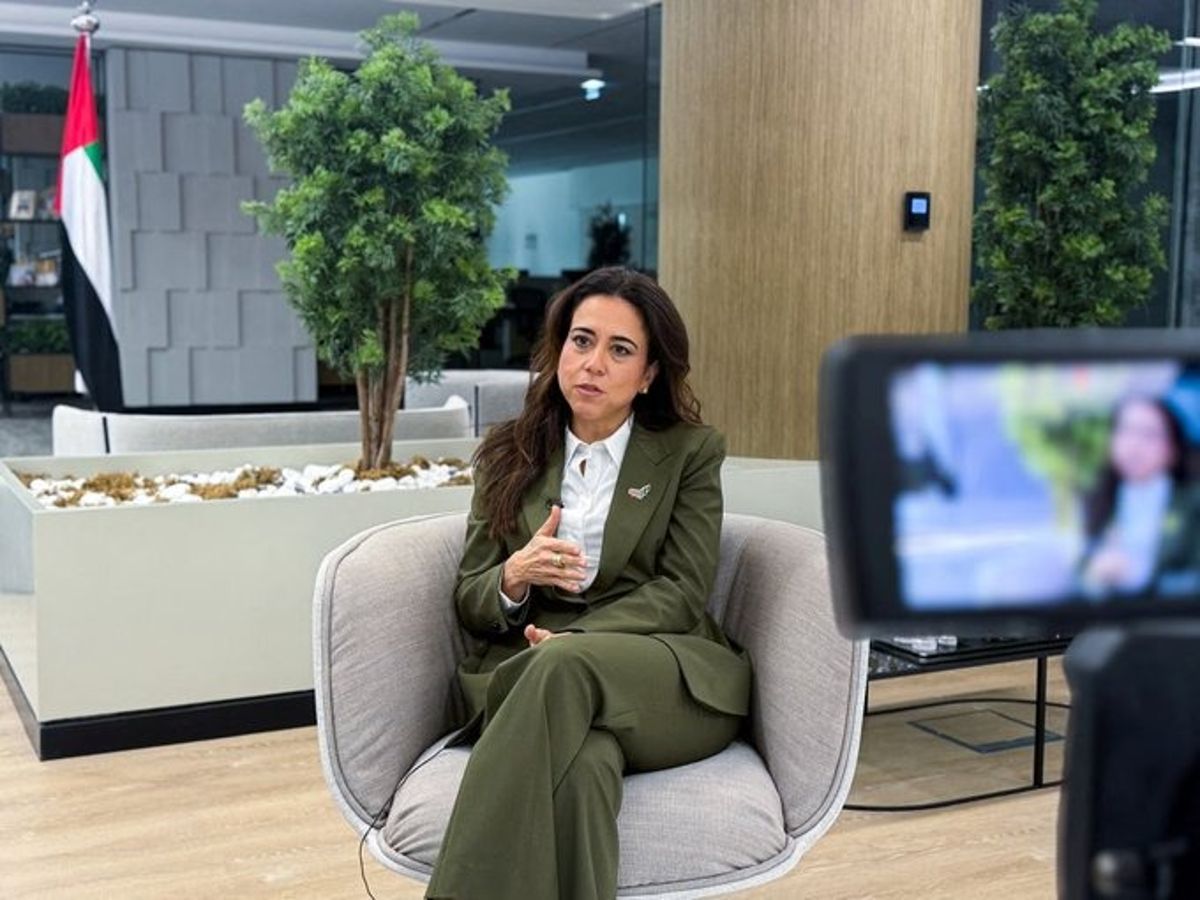
These findings come as the UAE faces increasing scrutiny over its record in Sudan, coinciding with the candidacy of Lana Zaki Nusseibeh, one of its most prominent diplomats, for the next UN Secretary-General, after she led Abu Dhabi's efforts for years to deny accusations of supporting the RSF.
Nusseibeh, 48, a Cambridge University graduate of Palestinian origin, represented the UAE at the United Nations for more than a decade before returning to her country in 2024, where she was appointed Minister of State for Foreign Affairs the following year.
As she entered the race for UN leadership last October, her candidacy raised questions about her past role in handling the Sudan file, especially amid accusations that she attempted to deny or downplay evidence indicating the UAE's support for the RSF, which is accused of widespread violations, in breach of the UN arms embargo.
Critics also argue that Nusseibeh sought to limit UN oversight of Emirati policies in several Arab countries and at times obstructed the work of investigation committees tasked with monitoring violations and breaches of arms embargo resolutions.
Bruno Stagno Ugarte, an official at Human Rights Watch, said that Nusseibeh spent more than a decade in Emirati government positions, during which she, in his words, engaged in "repeated whitewashing" of her country's role in Yemen and Sudan, presenting Abu Dhabi as a humanitarian actor while ignoring or concealing growing evidence of its role in fueling abuses.
He added that her candidacy raises questions about her willingness to defend the independence, integrity, and investigative mechanisms of the United Nations, including those that expose the UAE's violations.
In contrast, a spokesperson for the Emirati government denied that his country supports any party in the Sudanese war or seeks to undermine UN investigations. Abu Dhabi also informed the United Nations in a separate statement that the security company named in the report did not deploy mercenaries in Sudan and did not violate any Emirati law.
Nusseibeh said in an email that ending the "horrific conflict" in Sudan would be a priority for her if she becomes Secretary-General, pledging to act against any external power that UN investigators prove is fueling the war and to deal with the country concerned. She added that Sudan would be a "real test for the next Secretary-General."
Nusseibeh has been the Emirati diplomatic face on the Sudan issue since the war broke out in 2023, while Abu Dhabi has faced repeated accusations of providing military support to the RSF, including weapons, drones, and logistical assistance.
In 2024, The New York Times revealed that the UAE was operating advanced Chinese drones from a base in Chad, under the guise of Red Crescent operations, as part of its support for the RSF.
Although other countries, including Russia, Iran, Turkey, and Ukraine, have contributed to fueling the war by sending or selling weapons to the Sudanese army, the newspaper states that the Emirati role has been the most pivotal, leveraging Abu Dhabi's resources and its relationships with regional allies, including Ethiopia and Chad, to support the RSF.
Nusseibeh has frequently denied in press interviews that her country provides any military support to the forces, telling CNN in 2024 that these accusations are "categorically untrue," asserting that Emirati aid was limited to the humanitarian aspect.
According to former US officials, Nusseibeh exerted quiet diplomatic pressure on foreign allies to support the UAE's declared position of neutrality in Sudan. However, even during closed-door meetings, she avoided providing clarifications about her country's role, which hindered direct diplomatic efforts to end the conflict through negotiation, according to the officials.
In 2024, the UAE canceled meetings scheduled with senior British ministers in protest of what its leaders considered London's failure to defend Abu Dhabi during a Security Council session on Sudan, according to a former high-level US official who spoke to the newspaper on condition of anonymity.
Colombian Mercenaries in Sudan
Recent investigations into the Emirati role have focused on a group known as the "Desert Wolves," comprising Colombian mercenaries hired to fight alongside the RSF.
Media outlets and human rights organizations have documented the participation of these mercenaries in operating drones, training fighters, and providing artillery support during the RSF's siege of the Sudanese city of El Fasher last year, in one of the war's bloodiest phases.
The UAE had faced similar UN accusations earlier this year after the Panel of Experts tasked with monitoring the arms embargo on the Darfur region submitted a detailed report to the Security Council in July, affirming that "the UAE supported the Rapid Support Forces by providing mercenaries."
The report indicated that the Colombian mercenaries received training at two military bases inside Abu Dhabi before being sent to Sudan.
However, the report was not published after Bahrain, which at the time held a non-permanent seat on the Security Council, objected to its public release, according to a high-level UN official and a regional diplomat who spoke to the newspaper on condition of anonymity. The sources said that Bahrain acted at the request of the UAE.
A UAE spokesperson denied that his country exerted any influence on Security Council members, while the Bahraini Ministry of Foreign Affairs did not respond to requests for comment.
The latest UN report, submitted to the Security Council on Friday, indicates that the mercenaries were hired through "Global Security Services Group," a private security company based in Abu Dhabi with close political, commercial, and family ties to prominent figures in the Emirati ruling family.
Records show that the company was founded by a senior official in the Emirati presidency, and on its website, it describes itself as the "preferred security provider" for the UAE's Ministry of Foreign Affairs and Ministry of Presidential Affairs.
Analysts believe that the escalating scrutiny of Nusseibeh's record on Sudan could affect her campaign for the Secretary-General post, with a recent exploratory poll of eight candidates placing her in the middle of the list.
Cameron Hudson, a former CIA analyst and former Director for African Affairs at the US National Security Council, said that the UAE's continued denial of support for the RSF makes the UN investigative mechanisms Nusseibeh seeks to lead "a mockery."
He added that Nusseibeh played a prominent role in obscuring her government's contribution to the atrocities committed in Sudan, arguing that this should disqualify her from any nomination for the position.
Previous Accusations Regarding Yemen and Libya
The accusations regarding the UAE's attempts to limit UN oversight are not confined to the Sudan file; the newspaper pointed to previous Emirati actions concerning Yemen and Libya.
In 2011, the UAE, in cooperation with Saudi Arabia, exerted pressure that led to the closure of a UN investigation committee that was reporting on human rights violations in Yemen, where Emirati forces were deployed.
In 2016, Nusseibeh communicated with Emirati officials regarding UN accusations that her country was supplying Libyan military commander Khalifa Haftar with weapons, in violation of the arms embargo on Libya.
Email correspondence mistakenly sent to the United Nations revealed a message from an Emirati official to Nusseibeh that read: "The plain truth is that the UAE has violated the Security Council resolution on Libya and continues to do so."
The United Nations had published some of this correspondence with the official's name redacted, but The New York Times reported this week that it had obtained an unredacted version revealing his identity as Ahmed Al Qasimi, a diplomat who worked with Nusseibeh at the UAE Mission in New York.
In November 2025, Nusseibeh led Emirati efforts to influence members of the European Parliament regarding an upcoming resolution condemning atrocities in Sudan, according to Politico. The parliament later passed the resolution without mentioning the UAE.
المصدر: The New York Times