Waste Besieges Taiz: A Worsening Environmental Crisis and Health Risks Threaten Residents
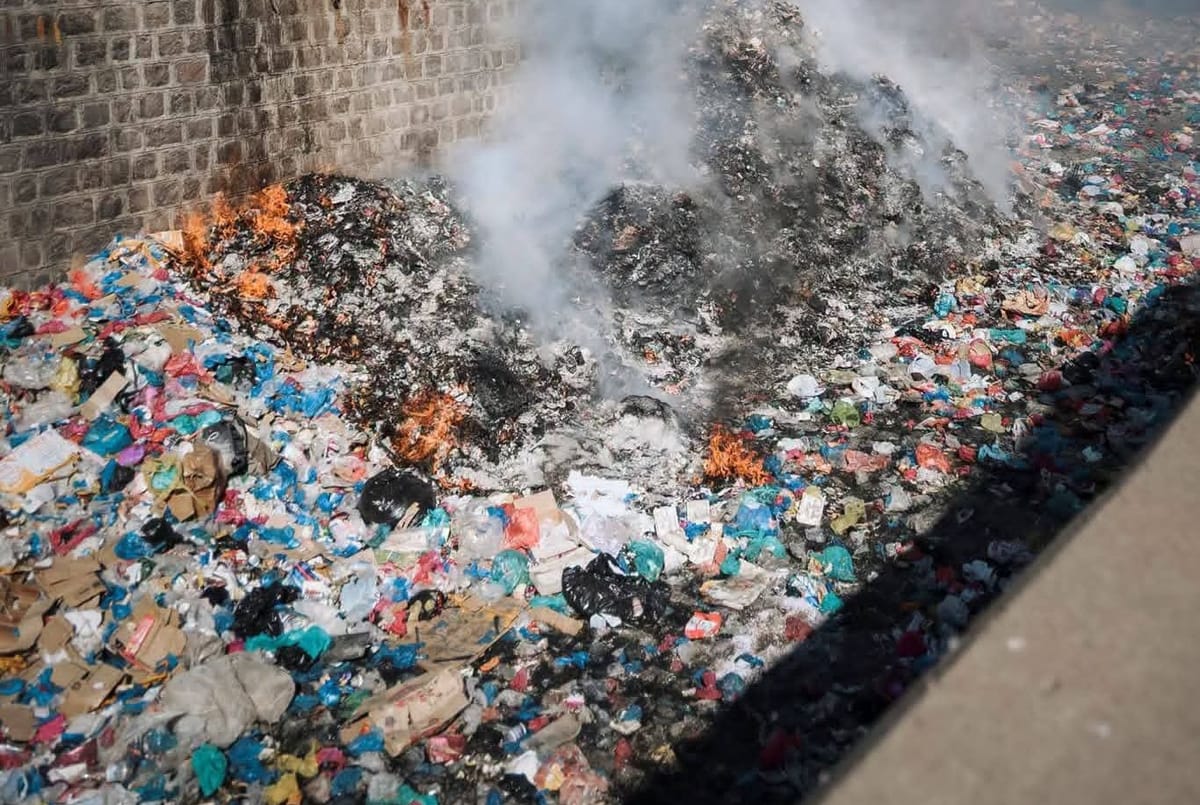
The accumulated piles of waste in the streets and neighborhoods of Taiz are no longer just a testament to deteriorating services, but have become a growing threat to the health and safety of residents. This is due to the continued disruption of waste collection and transfer to disposal sites, resulting from restrictions imposed by the Houthi group on sanitation trucks accessing the Al-Dhabab landfill west of the city.
As the crisis persists, tons of waste are piling up in streets and residential areas, amidst the spread of foul odors, insects, and smoke from burning waste. This scene exacerbates environmental pollution and exposes residents to increasing health risks, especially in areas near waste collection points.
In recent days, flash floods in several city streets have complicated the situation further, washing away quantities of accumulated waste and carrying them into drains and low-lying residential neighborhoods.
While the floods seemed to have cleared some of the waste from the streets, they actually pushed it to other areas, adding new dimensions to the crisis amid fears of insect infestations and worsening health and environmental risks as the waste becomes wet and decomposes.
Between the faltering cleaning efforts and the ongoing restrictions on waste transport, the circle of pollution in the city is widening. The waste crisis is transforming from a service problem into an environmental and health threat that puts the lives of thousands of residents at increasing risk, raising questions about the local authorities' ability to contain its repercussions and mitigate its effects.
Daily Suffering in Neighborhoods
In this regard, citizen Ahmed Al-Sharabi, a resident of the Al-Jumhuri neighborhood in Taiz, says that waste has been accumulating heavily in the neighborhood's streets, a scene that worsens with rainfall, which leaves the waste exposed and provides a suitable environment for the breeding of insects and mosquitoes.
Al-Sharabi told "Almahriah Net" that the spread of garbage, insects, and foul odors has raised residents' fears of the spread of diseases and fevers, especially among children. He noted that this has doubled his concern for the health and safety of his children, who have to pass by the piles of waste scattered in the streets.
He explained that residents' suffering worsens day by day with the continuous accumulation of waste without regular removal. He pointed out that sanitation workers sometimes resort to burning garbage in the middle of residential neighborhoods, which increases residents' fears due to the rising smoke and its associated air pollution and health risks.
He said that residents can no longer tolerate this situation, calling on the relevant authorities to intervene urgently to remove the waste and put an end to this suffering that affects their daily lives and health.
A Crisis Beyond the Fund's Capabilities
Regarding the reasons for the ongoing crisis and the efforts to address it, the Executive Director-General of the Cleaning and Improvement Fund in Taiz Governorate, Engineer Walid Al-Salami, stated that protecting citizens from the health and environmental risks of accumulated waste is a shared responsibility among the concerned authorities, each according to its jurisdiction. He affirmed that the Fund bears its executive responsibility for collecting and transporting waste, but it cannot single-handedly tackle a crisis intertwined with security, logistical, financial, environmental, and health factors, foremost among them being the inability to access the final waste disposal site in the Al-Dhabab area.
In an exclusive statement to "Almahriah Net," Al-Salami explained that the local authority's responsibility is to lead the response, coordinate efforts, and mobilize resources, alongside the role of government agencies, international organizations, the private sector, and the community in providing necessary support. He stressed that the Fund is not shirking its responsibilities but is operating under exceptional circumstances with limited resources, which means protecting public health requires the solidarity of all parties, rather than blaming one entity for a crisis that exceeds its capabilities.
He pointed out that the Fund needs urgent and integrated governmental and humanitarian intervention, not limited to temporary waste removal campaigns, but including the provision of fuel, maintenance of machinery, spare parts, and workers' wages, as well as supplying it with additional trucks, compactors, and equipment for transport and loading.
He added that the needs also include support for establishing and equipping collection yards, sorting, treatment, and recycling centers, providing household sorting tools, and rehabilitating final disposal sites and finding safe temporary alternatives. He noted that the Fund is working on preparing specific technical and financial needs to ensure that support is based on clear studies, quantities, and costs, and can be subject to monitoring and impact assessment.
Al-Salami emphasized that "what is required is not just funding to remove the accumulated waste, but to rebuild an integrated and sustainable waste management system in the city to ensure the crisis does not recur."
He explained that if urgent operational requirements are met, including fuel, machinery, workers' wages, and safe disposal sites, and if the restrictions hindering access to the Al-Dhabab site are addressed, a tangible improvement could be achieved within the first few weeks, with a gradual restoration of regular collection and removal operations over an estimated period of one to three months.
He stressed that this timeframe is conditional on providing the necessary resources and solutions and does not mean the crisis will automatically end over time. He affirmed that the Fund's goal is not just to clear the current accumulations but to restore a regular service that prevents the problem from recurring.
Regarding the measures taken to mitigate health and environmental risks, Al-Salami said the Fund continues to work and direct available resources towards the neediest and most at-risk areas, especially markets, crowded neighborhoods, the vicinity of health facilities, and waste accumulation sites that pose a threat to public health.
He continued: "The Fund is working to intensify field campaigns and reorganize waste collection and removal routes, in coordination with the local authority and health and environment offices, to assess risks and search for temporary, safe, and approved sites for waste disposal, until the problem of accessing the Al-Dhabab site is resolved."
Al-Salami concluded his statement by emphasizing that the city of Taiz needs not just temporary cleaning campaigns, but an integrated and sustainable waste management system. He noted that the Fund looks forward to achieving this in partnership with the local authority, the government, organizations, and the community.
Warnings of Health Risks
In the same context, pharmacist Aidarus Sadiq warned of a worsening serious health and environmental crisis in Taiz city due to the accumulation of waste in residential neighborhoods and the Houthi militia's prevention of its transport to the designated landfill, which has led some residents to burn it indiscriminately.
In a statement to "Almahriah Net," Sadiq said that the accumulation of waste, along with its random burning, rainfall, and stagnant water, has contributed to the pollution of air and water sources, creating a favorable environment for the breeding of mosquitoes, flies, and rodents that carry diseases.
He added that the gases emitted from waste and the smoke from its burning, in addition to contaminated water, increase the risk of spreading respiratory and skin diseases and infectious epidemics, including cholera, dengue fever, malaria, and typhoid.
He explained that children under five, asthma and allergy patients, the elderly, pregnant women, and those with chronic diseases are the most vulnerable groups to these risks, along with sanitation workers who deal directly with the accumulated waste.
Sadiq noted that the crisis's repercussions coincide with an increasing number of patients arriving at the city's hospitals, led by Al-Thawra Hospital Authority, the Swedish Hospital, and the Military Hospital, along with other health facilities. These facilities are struggling to cope with the increased pressure due to a lack of operational budgets and a severe shortage of medicines, medical supplies, and petroleum products needed to run vital departments.
Regarding preventive measures, Sadiq called on residents to take urgent steps to reduce health risks, including closing windows and doors when smoke is present, sealing gaps with wet towels, wearing medical masks, keeping asthma inhalers accessible for patients, and ensuring children and the elderly stay indoors during periods of air pollution.
He also stressed the need to boil or sterilize drinking water and store it in covered containers, wash hands regularly with soap and water, clean fruits and vegetables thoroughly, and cover food. He also advised drying up stagnant water around homes, installing screens on windows, using mosquito nets, especially for children, tightly sealing garbage bags, and refraining from burning them indiscriminately.
Sadiq called on the Presidential Leadership Council, represented by its chairman Dr. Rashad Al-Alimi, the Arab Coalition countries led by Saudi Arabia, and the United Nations to intervene urgently and apply pressure to end the Houthi siege on the city and open the roads for sanitation trucks to transport waste to approved landfills.
He also called for providing emergency support to hospitals and health facilities, including medicines, fuel, and operational budgets, to help them cope with the increasing pressure and save civilian lives. He warned that the continuation of the crisis without urgent intervention could lead to a catastrophic epidemic threatening the city's residents.
المصدر: Almahriah Net