STC Links Houthi Confrontation to Secession Recognition: Is the Battle Becoming Leverage Against Saudi Arabia?
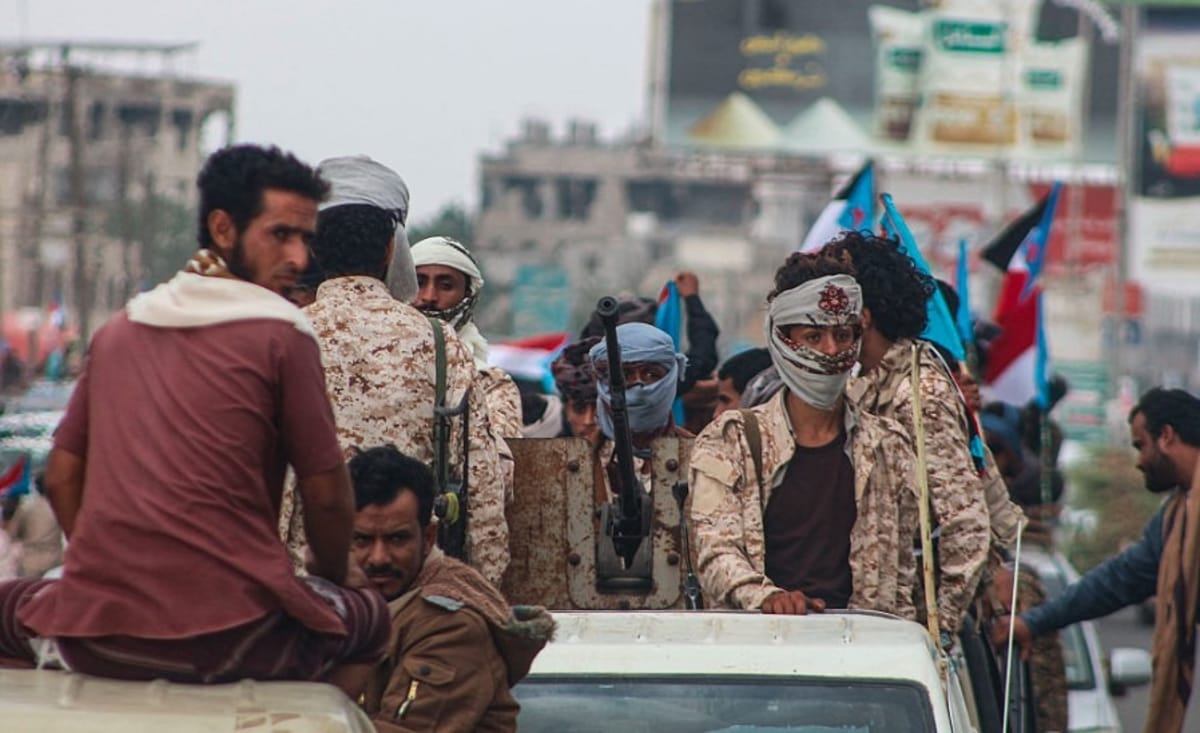
Amid the complexities of Yemen's political and military landscape, the dissolved Southern Transitional Council (STC) is proposing new conditions to reset its relationship with Saudi Arabia. It places the recognition of the southern secession project and the return of its leader, Aidarous al-Zubaidi, at the forefront of its demands, a move that reflects its insistence on linking any political understandings to the future of its separatist project.
Statements by Amr al-Beidh, al-Zubaidi's special representative, to the British newspaper 'The Guardian,' reveal the council's condition that Riyadh recognize the political declaration issued by al-Zubaidi regarding the establishment of a southern state. He believes that his return would boost the morale of southern forces and help unify their military formations.
Al-Beidh's demands did not stop there; he linked Saudi Arabia's non-compliance to the continued expansion of the Houthi group. He warned that the absence of political and practical support for southern forces would undermine their ability to confront them, in a discourse that presents Riyadh with an equation combining the STC's political demands with the requirements of military confrontation.
These conditions raise questions about the STC's motives for presenting them at this time, the extent to which it seeks to use the threat of Houthi expansion as a pressure tactic to extract political gains from Riyadh, and the implications for the unity of anti-Houthi forces and the future of a political settlement in Yemen.
Power Struggle Behind the STC's Demands
In this regard, political and media activist Wissam Al-Saleh says that Amr al-Beidh's statements do not express the demands of the STC as much as they represent, in her estimation, a UAE message directed at Saudi Arabia and the legitimate Yemeni government, in the context of what she described as a power struggle between Abu Dhabi and Riyadh in Yemen and the region.
Al-Saleh explained, in a statement to 'Al-Mahriah Net,' that the STC and its leaders, including Aidarous al-Zubaidi, Amr al-Beidh, and Hani bin Breik, represent local fronts for the Emirati project. She stated that Abu Dhabi uses these figures to convey its demands and conditions to Saudi Arabia, as its direct intervention in Yemeni affairs has become more difficult after its withdrawal from the coalition and departure from Yemen.
The UAE at the Forefront
Al-Saleh links this escalation to an Emirati attempt to retaliate against Saudi Arabia and the legitimate Yemeni government following Abu Dhabi's exit from Yemen. She noted that the UAE seeks to weaken Riyadh's position and disrupt the Yemeni state's path by activating its local allies and influencing military formations it previously supported.
In this context, she cites what she considers an Emirati pattern of interfering in the affairs of regional countries by supporting local parties, deepening divisions, and controlling strategic sites, ports, islands, and economic resources.
Al-Saleh believes that the conditions put forward by al-Beidh, related to the return of al-Zubaidi and the STC to the leadership of southern forces and the recognition of the political declaration for a southern state, represent Emirati demands more than independent demands of the STC.
She added, "Saudi Arabia's acceptance of these conditions would mean a significant decline in its regional influence and an admission that Abu Dhabi has imposed its will on the Yemeni file. Riyadh will not accept them as long as it maintains its position and regional role.
She added that the establishment of a separatist state in southern Yemen would pose a direct threat to Saudi interests, security, and stability in the short and long term. It could also pave the way for entrenching the country's division, giving the Houthis a justification to proceed with their project of establishing a separate entity in northern Yemen.
Al-Saleh warned that such a scenario could move the circle of conflict inside Saudi territory, instead of keeping it confined to the Yemeni arena.
In her interpretation of the timing of these demands, Al-Saleh says the UAE seeks to influence the course of the military confrontation with the Houthis, taking advantage of the presence of forces and military formations it previously supported in southern Yemen.
Al-Saleh noted that "Abu Dhabi is trying to disrupt the battle from within, by influencing some leaders and elements within the Giants Brigades and other southern formations, pushing them to withdraw or not engage in the confrontation, thereby weakening the anti-Houthi front." She added that the relationship between the UAE and the Houthis has moved, as she described, from unannounced understandings to a more obvious rapprochement, considering al-Beidh's statements to reveal part of this path.
Al-Saleh explained that Saudi Arabia, in contrast, faces challenges in managing the Yemeni file, most notably the slow pace of decision-making and dealing with political and military shifts, which gives its adversaries space to maneuver and make gains on the ground.
She believes that the Houthis are going through a phase of weakness and that the current stage requires military advancement, not just a policy of retreat or repositioning. However, she thinks that international calculations, particularly American and British positions, along with local and regional power balances, limit Riyadh's ability to act unilaterally.
She pointed out that the Yemen file is not subject to Saudi calculations alone, but involves the intertwined interests of international and regional parties. She highlighted the American and British roles in the crisis, and what she considers the influence of these parties on military operations and political settlements, recalling the 2018 Stockholm Agreement and the subsequent halt of government forces' advance towards the city and port of Hodeidah.
Riyadh's Calculations and the Risks of Secession
Al-Saleh said that the option available to Saudi Arabia is to support the restoration of the Yemeni state and end the Houthi coup, while simultaneously addressing imbalances within the anti-Houthi camp and cutting off the arms that still work for the UAE's interests and affect the front's cohesion from within.
She warned that a loss of Saudi influence in Yemen, or allowing the establishment of a separatist state in the south, would mean squandering the gains made during the war years and opening the door for Houthi expansion and increased risks to Saudi security.
Al-Saleh called for radical changes in the management of the Yemeni file, and for bringing in national political and military figures who were sidelined in recent years due to Emirati influence, including Ahmed Al-Maysari, Ahmed Obeid bin Daghr, and other personalities
She stressed that relying on figures who do not have steadfast loyalty to state institutions, or who were previously associated with diverse political and military projects, will not help achieve victory against the Houthis. She emphasized the need to entrust responsibility to leaders who believe in the Yemeni state project and maintain balanced relations with Saudi Arabia.
Al-Saleh concluded her statement by saying that "Yemen and Saudi Arabia face a common battle of destiny, and any retreat in the position of one will reflect on the other." She considered that confronting the Houthis requires unifying efforts and relying on leaders with clear loyalty to the state, instead of reproducing the tools that contributed to complicating the scene and weakening the institutions of legitimacy.
Limited On-the-Ground Impact
In a related context, political analyst Hassan Moghales downplayed the importance of Amr al-Beidh's statements, considering that they do not necessarily reflect an influential political position or possess the military tools on the ground to enforce the demands the STC is making on Saudi Arabia.
Moghales says, in a statement to 'Al-Mahriah Net,' that "al-Beidh does not possess military force or on-the-ground influence that could give his statements strategic weight." He considers that the positions of the STC leaders, including Aidarous al-Zubaidi, are linked to Emirati calculations and policies in Yemen and the region.
He believes that linking the confrontation with the Houthis to the recognition of the southern secession project and al-Zubaidi's return is an attempt to pressure Saudi Arabia and disrupt the political scene, rather than a position based on actual military capabilities. He pointed out that the impact of these statements remains confined to the media and social media platforms, and does not necessarily reflect on the balance of power on the ground.
Moghales adds that talk of reconciliation between the STC and Saudi Arabia raises questions about the nature of the relationship the council seeks to restore, given the existence of the Presidential Leadership Council and the Yemeni government. He believes that Riyadh deals with official institutions and should not give these statements a significance that exceeds their actual impact.
Moghales noted that the return of Aidarous al-Zubaidi does not, in itself, represent a solution to the problem of southern military formations or a guarantee of their unification. He pointed out that divisions within the southern camp and differing loyalties and leadership make addressing these issues more complex than the mere return of a political figure to the scene.
Moghales warned that linking the stance on confronting the Houthis to political demands related to al-Zubaidi's return and the secession project could negatively affect the unity of the anti-Houthi front and scatter efforts at a time when the confrontation requires unified positions and military capabilities. He considered that these statements seek to disrupt ongoing political and military movements.
المصدر: Al-Mahriah Net