Reactions to Repositioning from Dhubab & Bab al-Mandab
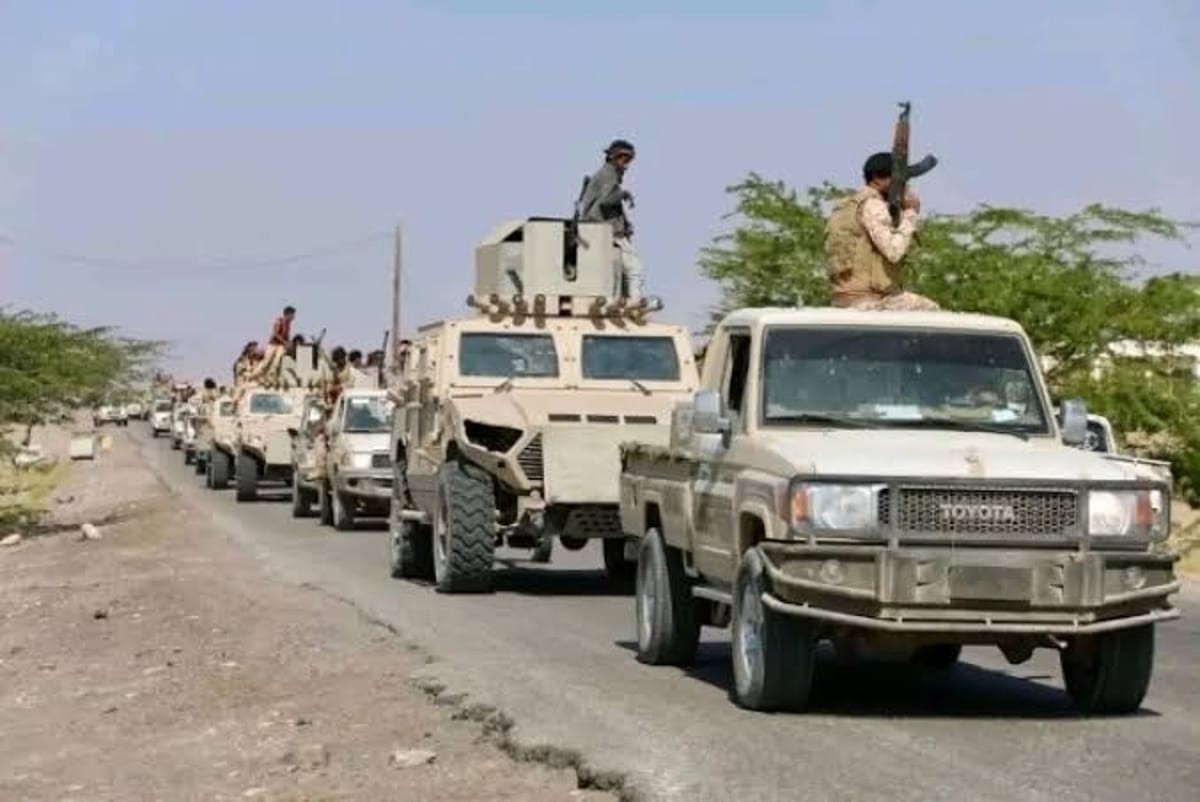
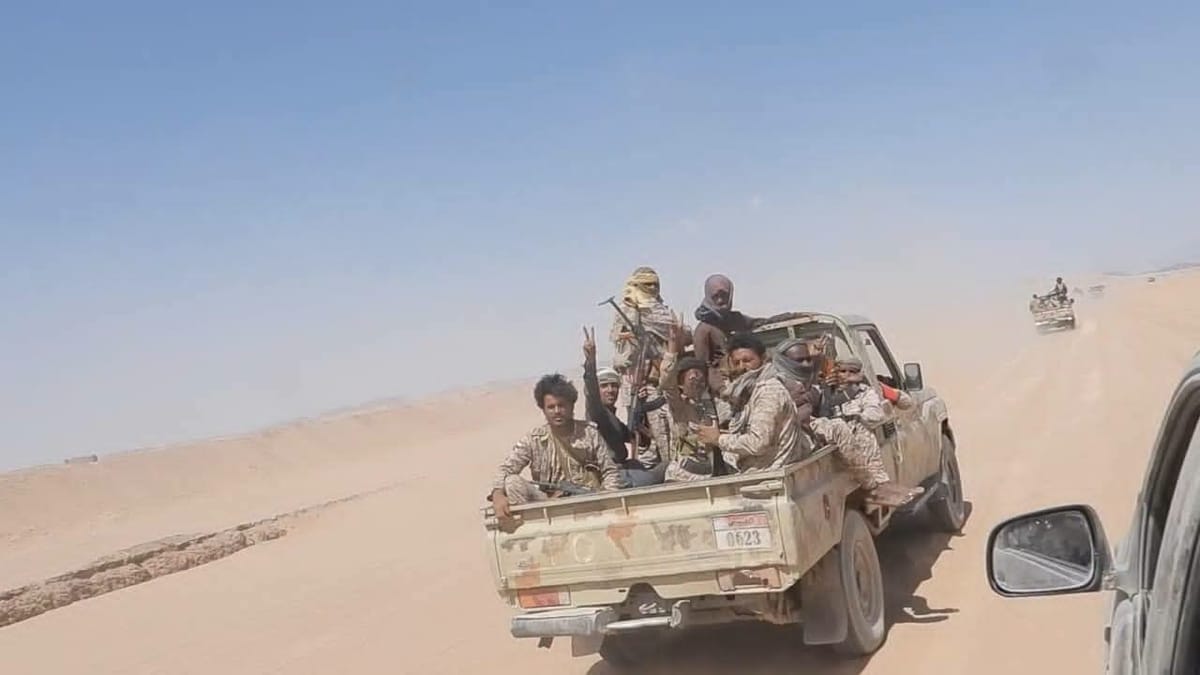
On Sunday, the Southern Armed Forces, led by Presidential Leadership Council member Abdulrahman al-Muharrami, announced their repositioning from Dhubab airport and the Bab al-Mandab area, west of Taiz governorate, in a move it said is part of prioritizing the security of the interim capital, Aden, and neighboring governorates.
In a statement, these forces said the repositioning comes in light of recent developments on the battlefronts, military buildups, and threats targeting Aden and neighboring governorates. They justified the move as stemming from the priority of securing Aden, reinforcing fronts, addressing existing threats, reorganizing their troop deployment, and strengthening their presence in areas and axes required by the current phase.
Yemeni army spokesman Majed Al-Nazili commented on the Southern Armed Forces' announcement of repositioning from Bab al-Mandab, saying the statement is an extension of the heroic stances of the popular resistance and southern forces in protecting the interim capital, Aden, and the southern governorates.
Al-Nazili added that liberating Bab al-Mandab and the western coast is an inherent right of the armed forces, and the international community must assume its responsibilities by contributing to the liberation process, given the strait's vital importance to maritime security and international trade.
In the same context, Minister of Information Salem Al-Awlaqi stated on Sunday that the repositioning from Bab al-Mandab aims to fortify vital areas, adding via his X platform account, "Major battles are managed with the logic of strategic priorities and precise battlefield calculations."
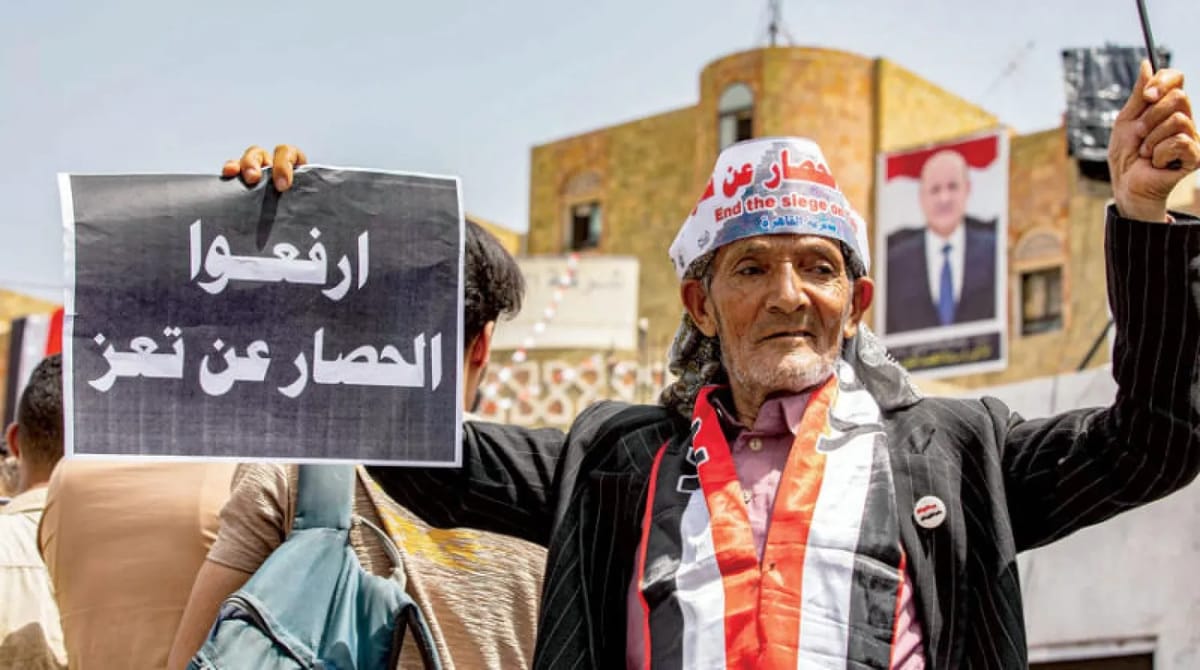
He said: The military repositioning carried out by the southern forces on Sunday morning aims to increase combat efficiency, fortify vital areas, secure supply lines, and is important for lifting the siege on Taiz.
He pointed out that the military and security formations along the fronts stand as one to protect the gains, restore the state's authority and institutions, and end the Houthi rebellion, and that field changes only make us more resilient, organized, and steadfast.
The move was considered a surprising development in the Yemeni crisis, coming about 40 days after the announcement of the "Dawn of Yemen" operation aimed at restoring state institutions and ending the Houthi group's control over the capital, Sana'a. It also drew widespread reactions from political, media, and activist circles.
Parliamentarian Mohammed Al-Hazmi wrote on the X platform: If the withdrawal, as we have learned, concerns brigades that were inactive and came under orders from the high command to reactivate them in hot zones and participate in breaking the siege on Taiz, then it is a sound decision.
He added: If an urgent decision to mobilize all fronts is not issued, it will subject the entire leadership to constitutional and legal accountability.
As for journalist and political analyst Abduljabbar Al-Jariri, he shared the southern forces' statement announcing the "repositioning" and withdrawal from Bab al-Mandab, saying: The Southern Giants Brigades were forced into this statement due to the significant attrition of their forces and the huge number of martyrs, at a time when the Marib and Al-Jawf fronts did not move to relieve pressure on them.
Former Minister of State for the Implementation of the National Dialogue Outcomes, Yasser Al-Ru'aini, also wrote on his X platform account: There is no harm in reorganizing and rearranging the forces and the theater of operations, but it is necessary to unify the command and manage the front's operations in a unified and effective manner. There are enough fighters on the Lahj and Bab al-Mandab fronts to liberate Bab al-Mandab, Mokha, and the western coast up to Hodeidah and break the siege on Taiz. Just choose who can lead the people effectively.
He added: Those who were brought forward for peace cannot lead the war, and those who betrayed the state in peacetime cannot be loyal to it in wartime. Activate the other nearby fronts to relieve pressure on Lahj and Taiz.
Al-Ru'aini said that attacking the Houthis on nearby fronts will achieve victory and relieve the pressure on the areas they are attacking us. He added that a defensive strategy is not effective in all wars; only offense prevents collapse and achieves victory.
He continued: The Houthi is weak, rejected, condemned, and a terrorist, and all the people of Yemen and the world are against him. His defeat is inevitable, so do not give him more time by showing weakness in leading the battle here or there.
For his part, the Yemeni Ambassador to the United Kingdom, Yassin Saeed Noman, considered the decision to withdraw from "Dhubab" and Al-Mandab and reposition as a correct decision that came at the right time, foiling the Houthi's flanking military operation for which they sacrificed columns of material and human casualties.
He added: True, these forces will leave a vacuum in important and pressing strategic areas, but their importance does not compare to the dangerous consequences that could have resulted from not taking this step at the right time.
He continued: While these forces bore the responsibility of defending a strategic international shipping lane for two months at the expense of securing critical battlefronts for the Lahj and Aden governorates, not to mention their central role in providing the military conditions to break the siege on Taiz, the redeployment must have been carried out within a strategic vision to reorganize this military front in the battle that the Houthis, and Iran behind them, planned to be decisive.
Noman said: In wars, such moments carry the weight of serious assessment and even more serious preparation to face all possibilities. The entire burden of the confrontation should not be thrown onto a single front without an accompanying military plan based on a careful reading to understand the reasons that made the Houthi, and Iran behind him, decide that this region would be the geography where he would manage his battle, and another careful reading to understand the requirements, not only for this front's resilience but also for relying on it to shift the confrontation from defense to offense.
Journalist Abdulrahman Anis wrote: The security of the Bab al-Mandab Strait is a shared international responsibility, not a local matter. Any threat to navigation in this vital corridor affects global trade and energy supplies and touches the interests of many countries.
Anis considered that protecting Bab al-Mandab and ensuring the continuation of safe navigation there require concerted regional and international efforts, and serious cooperation to confront threats targeting ships and sea lanes, and to maintain the security and stability of this strategic strait.
Minister of Local Administration Ahmed Al-Saleh said in a statement to Al Arabiya channel that there are very important priorities in preserving major cities like Lahj and Aden, as well as extending forces to other areas and joining with forces in Taiz.
Al-Saleh considered the repositioning decision to demonstrate "political and military shrewdness" in directing forces on a clear operational path because the Houthi wanted to steer this war on a very different course based on his desired capabilities and what the front meant to him, in order to tie up some forces in a theater of operations that may not be of utmost importance.
He continued: We must fully realize that the issue of Bab al-Mandab, where our Southern Armed Forces have stood their ground, is not only the responsibility of Yemeni forces and the coalition. All countries bordering the Red Sea and benefiting from it are fully responsible for participating in this matter and seeing their own interest.
He said: Our forces alone cannot defend the whole world, and the Bab al-Mandab Strait is not a purely Yemeni corridor. The entire world benefits from it, and therefore everyone must participate with their very natural responsibilities. However, this does not absolve the Yemeni Armed Forces of their military, political, and sovereign responsibility.
Writer and political researcher Yassin Al-Tamimi said that "the shocking withdrawal from Bab al-Mandab is not a military achievement, as sycophants or those forced by livelihood reasons try to portray it, but a military retreat that indicates difficulty in advancing towards strategic goals. It also puts a definitive end to the actual capabilities of the separatist fighters, who have deafened our ears for eleven years with claims of absolute ability to wage war, and have poisoned the political scene with vulgar insults to the nation's partners and to the brave fighters who have held out within a few kilometers in Marib and Taiz all these years, offering thousands of martyrs amidst clear betrayal, boundless schadenfreude, and false accusations of incompetence.
He added: The objective, careful discussion, far from settling scores, should revolve around whether the matter is about incompetence, the chaotic structure of the forces involved in the fighting, or the overlap and conflict of agendas, including the heavy presence of the sick separatist project at the heart of a battle concerning Yemen and its sovereignty. This raises concerns about the fertile ground this project provides for reviving regional power struggles and score-settling, even if it comes at the expense of the region's security and stability before that of Yemen's unity and stability.
Al-Tamimi said that those forces were not forced into this withdrawal, which undermines the government's position and represents a severe drain on the military reputation of the Coalition to Support Legitimacy, under the pretext of facing a potential Houthi flanking threat on the forces in Bab al-Mandab, after they managed to reach a point near the central coast of the Al-Madaribah wa Al-Arah district, located east of Bab al-Mandab.
He continued: The forces that classify themselves as southern should have fought the battle with the Houthis in Taiz, starting from Mokha in the west to Al-Hawban in the east. If they had the slightest strategic sense. But these forces were heavily influenced and held hostage by the digital battle raging on social media, which led to a very negative stance towards military risks coming from the other side of the virtual border, content to treat it as a matter concerning only the 'Yemenis'.
المصدر: Al-Mahriah Net