Writers and Analysts: Decision to Restore the State Opens a New Phase and a Long Battle

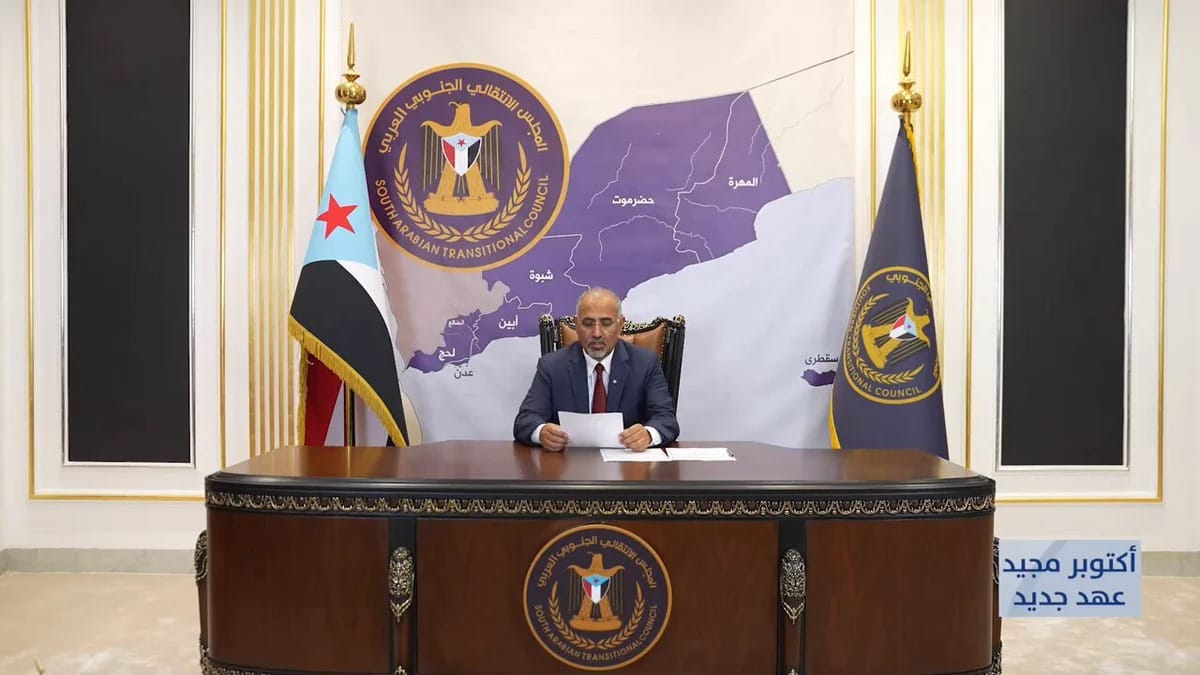
The interpretations of writers, journalists, and political activists varied regarding the announcement by the Chairman of the Presidential Leadership Council, Rashad al-Alimi, of the decision to restore the state and end the control of the Houthi group. Some considered the move the beginning of a long-awaited new phase, while others stressed that its success is linked to the presence of a capable leadership and a unified political and military will.
Journalist Abdullah Dubalah considered al-Alimi's announcement of the decision to restore the state an "excellent decision," noting that Yemenis have long awaited this step.
Dubalah said that the decision, contrary to those who believe it was long overdue, came in his view a few months ahead of schedule, due to the current developments in Taiz governorate.
He added that making the decision marks the beginning of a new phase that may not be easy, requiring patience and trust in the armed forces, with the possibility of completing logistical preparations in the coming period.
For his part, writer and researcher Nabil al-Bukairi described the battle as "existential" for Yemen and the region, stressing that setbacks or losses in some battles do not mean the end of the war.
Al-Bukairi explained that wars are based on a conflict of wills, narratives, and the causes for which the parties fight, stressing that belief in the justice of the cause is one of the most important elements of strength and steadfastness in any confrontation.
In turn, writer Samir Rashad Al-Yousifi considered the declaration to restore the state the beginning of a new phase, calling on Yemenis to rally behind the armed forces and the resistance in all its forms.
Al-Yousifi said that the battle, in his view, is not for revenge or destruction, but to restore state institutions, security, services, and citizens' rights, emphasizing the importance of adhering to the law and not being drawn into vengeance and retaliation.
On the other hand, journalist and political writer Marib Al-Ward expressed reservations about the possibility of achieving victory, noting that ordinary Yemenis have borne the consequences of the war over the past years, while officials and their families remained far from the battlefields.
Al-Ward stressed that achieving any victory requires conditions, most notably the presence of a true national leader who embodies the meaning of leadership, considering that this condition is not met at the present time, nor is it expected to be met in the medium term.
Al-Ward cited several leaders in Yemeni history, including Karib'il Watar, Ali Muhammad al-Sulayhi, and Yusuf al-Rasuli, to emphasize the importance of leadership in deciding battles.
As for writer and journalist Mustafa Naji, he believed that al-Alimi's declaration of a comprehensive battle to retake areas under Houthi control came after a general mobilization was announced and amidst difficult field conditions for Yemenis.
Naji said the announcement comes at a time when the military situation is escalating, mentioning developments on the West Coast and the pressures facing rural areas of Taiz.
He pointed out that government forces and the Houthis are in a race against time, noting that the speech of the Chairman of the Leadership Council presented the battle as a battle for all Yemenis to restore the republic and the state, free from sectarian and regional dimensions.
He added that the speech included messages to Yemenis in Houthi-controlled areas, along with promises to restore state institutions, pay salaries, and secure services.
Naji affirmed that what Yemenis are now waiting for is the shift from rhetoric to action on the ground, as they look forward to what he described as the "moment of salvation."
These positions reflect a divergence in reading the next phase, between optimism that sees the decision to restore the state as the beginning of a long-awaited move, and reservations that link its success to the readiness of the forces, the effectiveness of the leadership, and its ability to manage a long and complex battle.
المصدر: Almahriah Net + Open Sources