Tariq Saleh in Riyadh After Mocha's Fall: What Awaits the Coastal Forces and What Arrangements Are Expected?
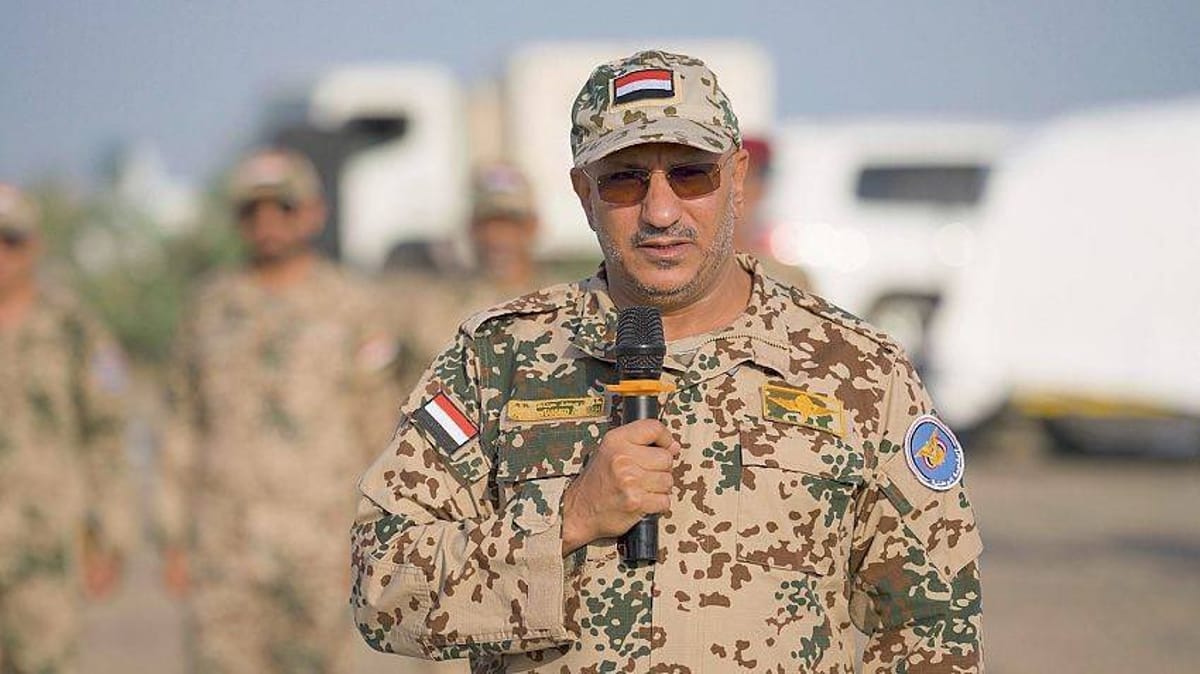
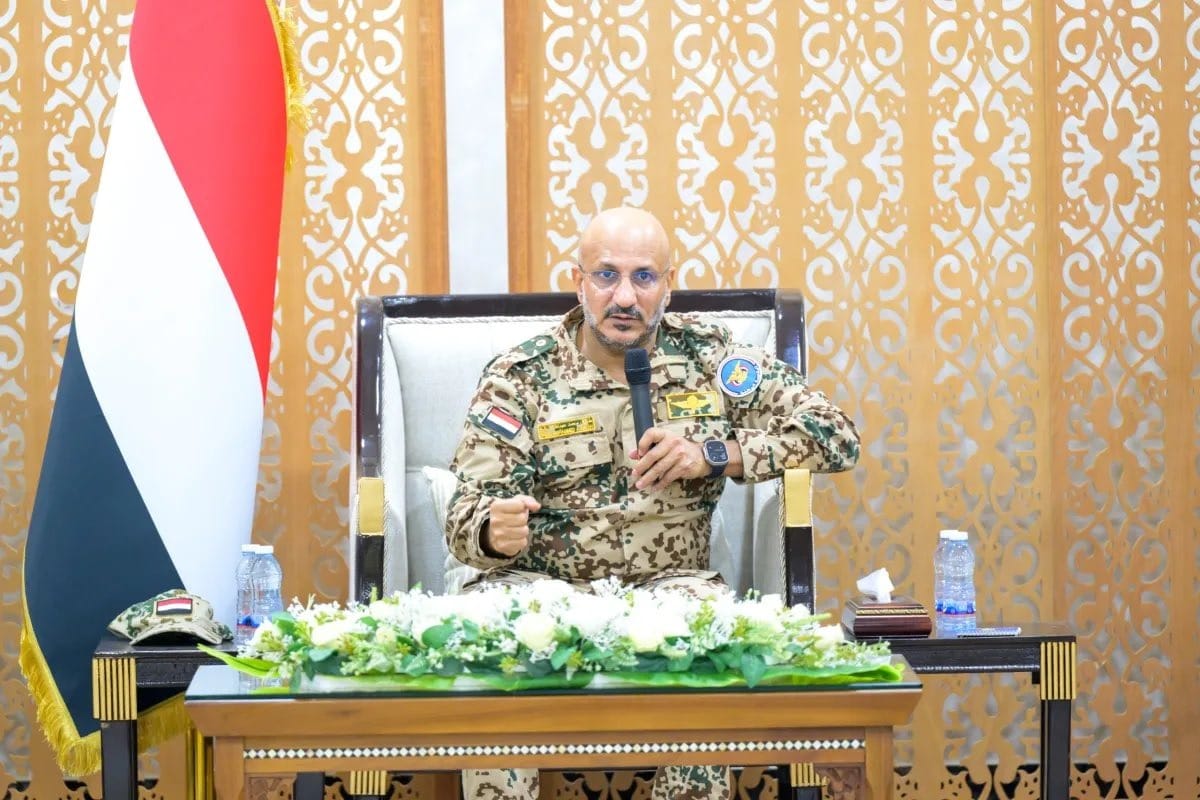
The Deputy Chairman of the Presidential Leadership Council, Lieutenant General Tariq Saleh, has arrived in the Saudi capital, Riyadh, days after leaving the city of Mocha following military developments that ended with the Houthi group's control of the city and strategic sites on the West Coast and Bab al-Mandab. This move opens the door to a new phase of reorganizing the political and military landscape for anti-Houthi forces.
Tariq Saleh's "Al-Jumhuriya" channel reported that his arrival in Riyadh is to discuss field developments and the progress of the battle against the Houthis, after he moved from Mocha to a safe area within Yemen, where he supervised the reorganization of operational command centers in coordination with the Arab Coalition.
Tariq Saleh's move to Riyadh at this time raises questions about the nature of the next phase: whether the visit will be limited to discussing military developments and the failures accompanying the battle for Mocha, or if it will involve broader arrangements concerning the leadership of the forces deployed on the West Coast, and Tariq Saleh's political and military position, in light of the significant field loss on the coastal front.
Journalist Ma'rib Al-Ward believes that Tariq Saleh's arrival in Riyadh has more than one implication, most notably that it has settled the debate about his whereabouts after recent developments. At the same time, it leaves the door open to questions about what his meetings or the anticipated decisions from the Presidential Leadership Council might lead to.
Al-Ward says it is still too early to judge Tariq's political and military future, noting that the coming hours and days may reveal the nature of the arrangements concerning him.
In this context, he outlines two main scenarios: the first is that he is dismissed from the Leadership Council and brought to trial, which could mean holding him or his affiliated forces responsible for what happened. The second is that he remains in his position while his forces are reorganized, which might indicate that his role in recent developments was not as some assessments suggest.
Al-Ward emphasizes that any reorganization of forces must, in his opinion, be accompanied by a comprehensive investigation that answers the questions of what happened, why it happened, who is responsible, and how the field collapse occurred. He believes that responsibility should not be placed on a single party and that the issue is also related to the level of leadership within the Presidential Leadership Council.
In contrast, journalist Ghamdan Al-Yousifi presents a stricter view of Tariq Saleh's future. He believes that any return to the political and military scene after the events in Mocha must be preceded by specific measures, starting with the removal of his official status as a member of the Presidential Leadership Council, whether through dismissal, resignation, or suspension.
Al-Yousifi also calls for Tariq Saleh to be subjected to an official investigation involving state institutions, and for his military and civilian powers to be withdrawn until the investigation's results are announced. The findings should be presented to the public before any decision is made about his political and military future.
For his part, human rights activist Riyadh Al-Dubaie goes even further, considering that giving Tariq Saleh a new political or military role after what happened in Mocha would be, in his words, an "insult to the state" and to the blood of Yemenis. He demands accountability for those responsible for the failure that led to the front's collapse.
Al-Dubaie believes the issue should not be reduced to a narrative of betrayals or defections, questioning the nature of the battle's management and the leadership's responsibility for large, trained, and equipped forces. He says that the fall of a front of this magnitude raises direct questions about the location of the command, how the battle was managed, and who bears responsibility for the outcome.
While opinions vary regarding Tariq Saleh's future, the broader issue seems linked to the fate of the forces that were deployed on the West Coast and the weapons they possessed. It remains to be seen whether the next phase will involve their redistribution and integration into a more unified military command, or the restructuring of their composition and leadership to align with new developments.
Ma'rib Al-Ward points out that what is required is not limited to internal political or military arrangements. In his view, it demands a strategy for dealing with the areas lost by government forces. He considers that what happened cannot be treated as a mere passing round in a long battle, given the geographical and military importance of the areas now under Houthi control.
In this context, the move in Riyadh gains additional significance, not necessarily as an announcement of decisions already made, but as a station where the features of the next phase may crystallize: from Tariq Saleh's future, to the structure of military leadership on the West Coast, the mechanisms for investigating the causes of the collapse, and ultimately, how to deal with the new map on the ground.
According to Al-Yousifi and Al-Dubaie, any return to the scene must go through accountability and the assignment of responsibilities. Meanwhile, Ma'rib Al-Ward believes that judging Tariq Saleh's future remains premature until the arrangements to be taken by the political and military leadership emerge.
Tariq Saleh's arrival in Riyadh does not seem to be merely a change of location after leaving Mocha and its fall to the Houthis. Instead, it is a political and military turning point, with Yemeni circles watching to see if the next phase will move towards reorganizing forces and leadership, or towards broader changes in the command structure and responsibilities, especially since the loss of Mocha and Bab al-Mandab has redrawn the military scene on the West Coast and opened the door to questions larger than the fate of a single commander.
المصدر: Almahriah Net + open sources