Washington Post: Future of US Base in Bahrain Uncertain After Iranian Attacks
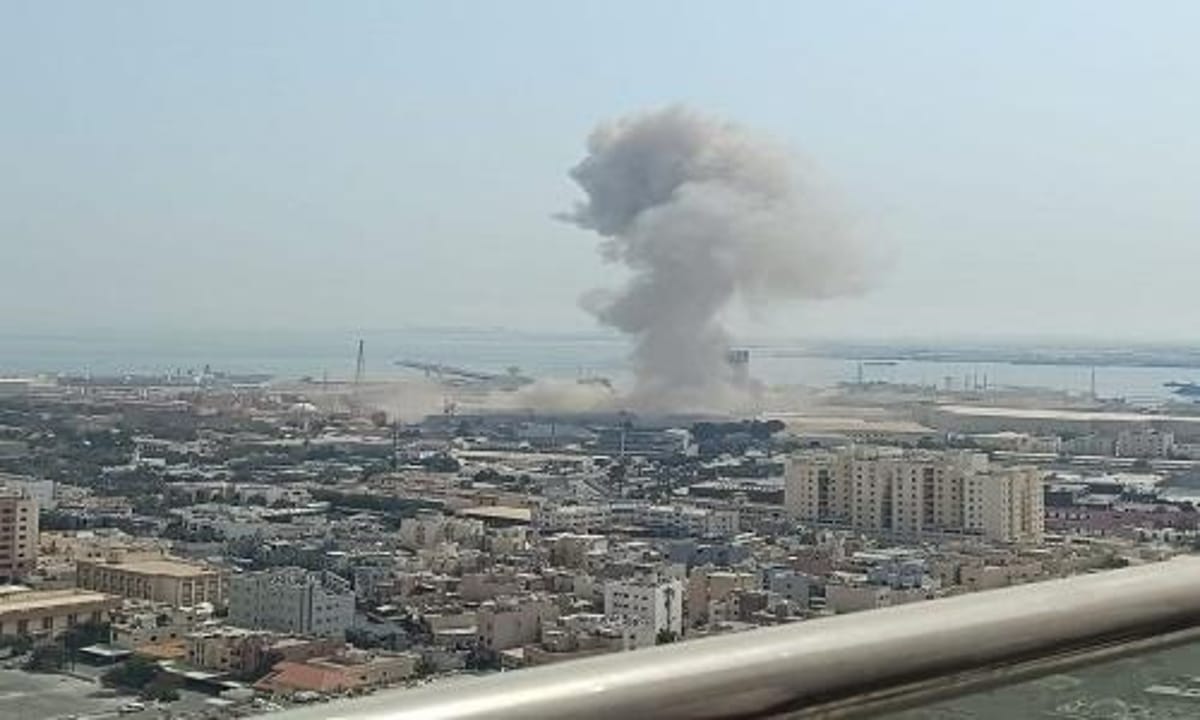
The US naval base in Bahrain faces an uncertain future after being subjected to Iranian attacks that caused extensive damage and led to the evacuation of most military personnel, their families, and civilian employees, amid a lack of specific plans regarding the resumption of its activity.
The Washington Post said in a report it published that residential neighborhoods that housed thousands of American military personnel and their families near the base are now almost empty, after most residents left, while the Pentagon is considering options related to moving its forces from the region to Israel and Jordan.
Bahrain, along with other Gulf countries allied with Washington, was subjected to Iranian attacks hours after the US and Israeli bombing of Iran began on February 28.
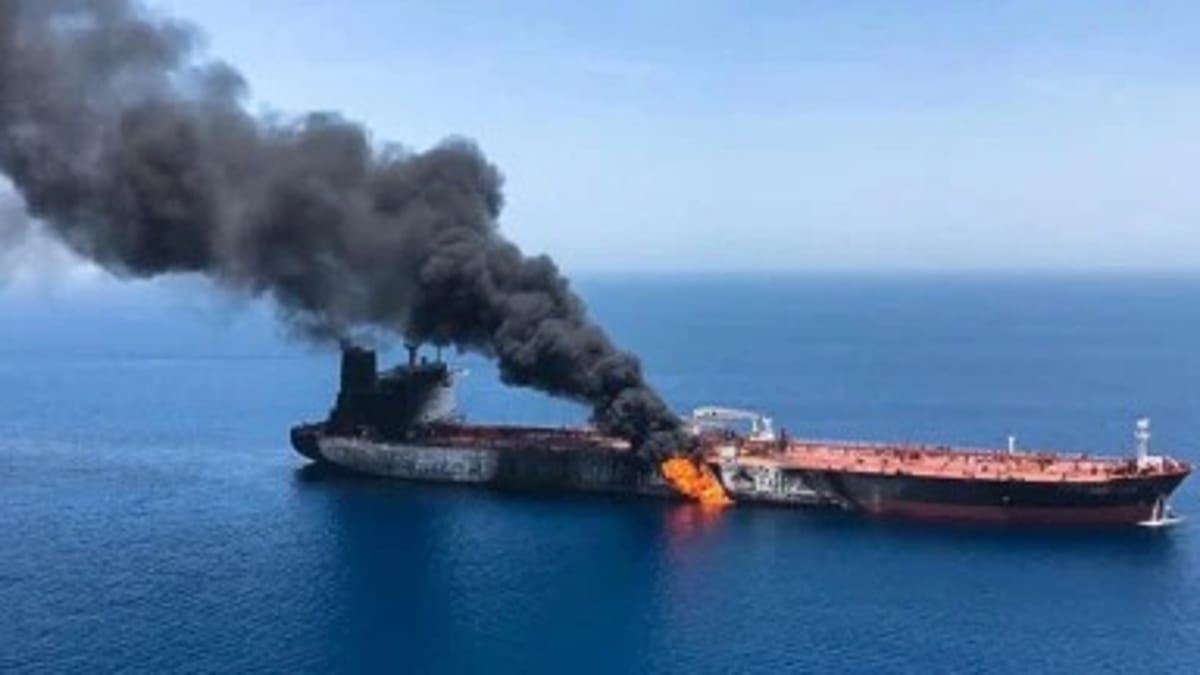
Video clips showed Iranian drones striking the base, causing large explosions. The attacks resulted in civilian deaths and dozens of injuries, including two US Department of Defense employees, and also affected nearby energy facilities, residential buildings, and data centers.
According to the Congressional Research Service, the cost of the damage to the base is likely to exceed $400 million, while the administration of US President Donald Trump has not made a broad acknowledgment of the extent of the damage.
The newspaper quoted US military officials as saying they do not know when, or if, the base will return to operating as it did before the war.
Life changed after the attacks
Before the war, the base, which houses the headquarters of the US Naval Forces Central Command and the Fifth Fleet, was a center of active military and social life, with more than 8,000 military personnel, family members, and civilian contractors residing in its vicinity.
Life there included family activities, weekly movie screenings, restaurants, shops, and an American school, as well as residential neighborhoods where naval personnel used to walk and interact with the local population.
The newspaper quoted Americans who had previously lived in Bahrain as saying that they felt safe and welcome, despite the island's proximity to Iran, which is only 125 nautical miles away.
The wife of a sailor, who asked to remain anonymous due to the nature of her husband's work, said that life in Bahrain was like living in a small town where everyone knows each other, describing her years there as the best of her life.
She added that she never expected Bahrain to be attacked by Iran, noting that she was preparing to attend a children's birthday party inside the base on February 28, before it was canceled hours later due to warnings of impending attacks.
Evacuation of families
John W. Miller, a retired US Navy Vice Admiral who held command positions at the base twice, said that officials were aware of its vulnerabilities, especially with the development of Iran's targeting capabilities.
He added that the base was responsible for managing the US military's relationship with Iran, but it was known that any war with it would not be managed from Manama, noting that most of the military personnel stationed there had been deployed throughout the region before February 28.
In contrast, families, teachers, and civilian contractors did not receive sufficient warning before being evacuated. On March 2, the US State Department announced the evacuation of non-essential government employees and their family members from Bahrain.
The sailor's wife was forced to obtain Saudi visas for herself and her children before leaving the country via the causeway connecting Bahrain and Saudi Arabia, while a teacher who worked at the Department of Defense school left with a single bag, not knowing the destination of the evacuation flight.
No plans for a near return
In September, the acting Secretary of the Navy acknowledged in an interview with The Epoch Times that Iran "utterly destroyed Bahrain."
Admiral Daryl Caudle, Chief of US Naval Operations, also said during a meeting with Navy personnel in August that the naval forces "won't be going back there anytime soon."
The Washington Post quoted US Navy officials as saying that the institution has only recently begun to study the shape of its future presence at the damaged base, stressing that there are no specific plans yet.
One official said that the Navy will not go near the base until the security situation is addressed, adding that returning under the current circumstances "does not seem logical."
In a statement to the newspaper, the US Navy said it had nothing to announce at the present time regarding the future of the base and that it could not comment on internal deliberations.
One official pointed out that the base's primary mission, as the regional headquarters for US naval forces in the Middle East, can be managed from the United States, similar to other US military commands in the region.
He added that the importance of the presence in Bahrain was to demonstrate Washington's commitment to the region and facilitate direct communication with its Gulf allies, tasks that could be carried out in the future through air visits, without the need to completely rebuild the base.
For its part, the Bahraini government declined to answer specific questions about the future of the facility but affirmed the continuation of the strategic partnership with the United States, which it said spans eight decades.
It added in a statement that the two countries are continuing their consultations on defense and security issues, including the US naval presence, stressing that the partnership remains based on mutual interests and trust.
Economic losses and questions within Bahrain
The impact of the Americans' departure was not limited to the military aspect but extended to commercial activities that had been linked for years to their presence in Bahrain.
The newspaper pointed out that souvenir shops, tailoring workshops, and Persian carpet stores were affected by the departure of military personnel and their families, as they constituted an important part of their clientele.
Ali Asghar, 42, who has been tailoring clothes for US Navy personnel since 2000, said that the Americans were like family to him, and that he misses them and wants them to return.
Karim Al-Sayegh, a goldsmith in his eighties, also spoke about the decline in his business activity, expressing hope that the situation would return to how it was, and for the return of the Americans who used to visit the souq to buy gold.
However, the departure of US forces has, in turn, raised questions among sectors of Bahrainis about the utility of its military presence and whether it provided the country with protection or made it vulnerable to Iranian attacks.
The newspaper quoted Bahraini human rights activist Mohammed Abdullah as saying that Bahrainis are paying the price for what the United States is doing in the region, questioning why his country became a party to this conflict.
It also quoted a Bahraini opposition leader, who requested anonymity, as saying that opponents had warned for years that the presence of a US base in the country could make it a party to any war waged by Washington.
He added that Bahrainis do not have the ability to choose the wars they find themselves a party to, considering that the government relies heavily on the Western presence.
Internal tensions and Gulf concerns
Some Shiite communities in Bahrain witnessed limited protests during the early days of the war, following the death of Iranian Supreme Leader Ali Khamenei, who held a religious status among followers of the Shiite sect.
Video clips circulated on social media showed people celebrating the Iranian strikes that targeted the US base.
Following this, Bahraini authorities tightened their security measures, arrested protesters, banned the publication of video clips of the attacks, and arrested a number of Shiite clerics, accusing them of collaborating with Iran and undermining national security.
Last week, life sentences were issued against dozens of them, while the families and lawyers of the detainees rejected the accusations, saying they have become hostages in the wider war.
In this context, a Gulf official told the newspaper that officials in the region are constantly concerned about the future of the military relationship with the United States, expressing hope for the return of US forces, including the Fifth Fleet, to the region "in one form or another"
For his part, Sayed Ahmed Alwadaei, Advocacy Director at the UK-based Bahrain Institute for Rights and Democracy (BIRD), said that Bahrainis' reactions to the departure of US forces showed that many do not see their presence as having provided them with security, but rather believe the opposite is what happened.
He added that criticism of the war could be met with accusations of treason, at a time when citizens, according to him, have no influential say in decisions related to this military presence.
المصدر: Washington Post